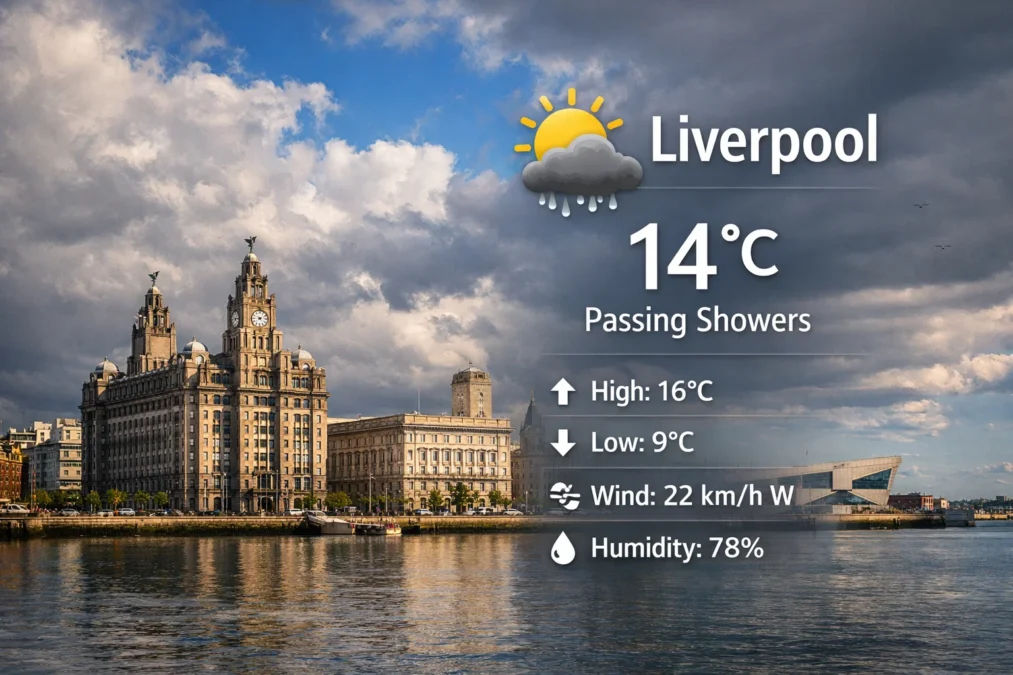
Weather Liverpool is more than a footnote in a travel guide; it’s a dynamic, living part of the city’s identity. Nestled on the eastern side of the Mersey Estuary, the city is cradled by the Irish Sea, which acts as a powerful moderator and instigator of its atmospheric moods. Understanding the weather Liverpool experiences isn’t just about knowing whether to pack an umbrella though you should probably pack one.
It’s about comprehending the delicate interplay of maritime influences, seasonal shifts, and microclimatic quirks that define life in this iconic corner of Northwest England. This comprehensive guide delves deep beyond the basic forecasts to provide you with an authoritative resource on the Liverpool climate, its nuances, and how to navigate it like a local.
The Maritime Influence on Liverpool’s Climate
Liverpool’s climate is fundamentally shaped by its relationship with the sea. The city sits on the 53rd parallel north, a latitude that, were it not for the tempering effects of the North Atlantic Drift (a continuation of the Gulf Stream), would experience far colder and more extreme conditions. This warm ocean current is Liverpool’s climatic guardian, ensuring that winters are generally mild and summers are seldom scorching. The Irish Sea, however, is a fickle partner. It releases heat slowly in autumn, keeping early winters at bay, but also absorbs warmth in spring, leading to famously cool and lingering springs where the phrase “April showers” feels like a permanent state.
This constant marine dialogue results in what meteorologists term a temperate maritime climate. In practice, this means high humidity, a notable lack of temperature extremes, and a prevailing southwesterly wind that funnels weather systems in from the Atlantic. These systems bring the city’s most defining feature: changeable conditions. It’s entirely possible, and indeed common, to experience sunshine, sudden heavy rain, and a stiff breeze all within the space of an hour. As one long-standing resident and amateur meteorologist noted, “In Liverpool, if you don’t like the weather, just wait fifteen minutes. But you’ll likely need a coat while you’re waiting.”
Seasonal Weather Patterns Through the Year
The seasonal rhythm of weather in Liverpool follows a predictable yet varied pattern. Winter, spanning December to February, is characterised by cool temperatures, with averages hovering between 2°C and 7°C. While heavy, lasting snow is rare due to the maritime influence, frosts are common on clear nights, and cold snaps can bring sleet or fleeting snowfalls that often cause more disruption than deeper snow would in prepared cities. The days are short, with twilight descending by mid-afternoon, and overcast skies are the dominant feature, contributing to a low annual sunshine total.
From March to May, Liverpool slowly shakes off its winter cloak. Spring is a season of incremental progress and frequent setbacks. Temperatures climb gradually from averages of 8°C in March to 12°C in May, but this is the peak time for those volatile weather shifts. Sunny, promising mornings can quickly give way to sharp, convective showers as the land begins to warm faster than the still-chilly sea, creating instability. This is when the city’s parks, like Sefton Park and Calderstones, truly come to life, with bursts of colour appearing between the passing rains.
Summer in the City: Sun, Showers, and Sea Breezes
Liverpool summers, from June to August, are generally pleasant and mild rather than intensely hot. Average highs sit comfortably around 19°C to 21°C, though occasional inland high-pressure systems can push temperatures into the high 20s. These warmer spells are often tempered by the famous Mersey breeze, a welcome relief on sunnier days but a biting addition on cloudier ones. The summer months see the longest days, with daylight lingering until 10 PM around the solstice, perfect for evening walks along the Pier Head or drinks at a Baltic Triangle terrace.
Despite being the driest season statistically, rain is still a frequent visitor. Summer precipitation often comes in the form of short, heavy showers or prolonged drizzly periods associated with Atlantic fronts. True thunderstorms are less common than in continental Europe but can occur. The key to enjoying a Liverpool summer is layering and embracing spontaneity a sunny plan for a ferry across the Mersey might need a quick rethink, but a bright interval is never far away.
Autumn: A Season of Dramatic Transformation
Autumn, from September to November, is arguably Liverpool’s most visually dramatic season. September can often feel like an extension of summer, with lingering warmth as the sea reaches its peak annual temperature. This period is known locally as a “second spring.” However, as the sun’s angle lowers, the cooling land mass begins to wrest control from the warm sea, leading to an increase in storm activity. Atlantic depressions deepen and arrive with greater frequency, bringing strong winds and prolonged rainfall.
By late October and November, the weather Liverpool presents becomes more consistently damp and blustery. Mists and fogs become more frequent, particularly in the river valleys and coastal areas. This is the season of spectacular sunsets over the waterfront, as low-angle light breaks through gaps in the cloud, illuminating the historic architecture in golden hues. It’s a time for cosy pubs, but also for invigorating walks as the trees in places like Croxteth Hall Country Park turn fiery shades of orange and red.
The Impact of Geography and Microclimates
While the overall climate is maritime, Liverpool’s specific geography creates subtle but important microclimates. The city centre, with its concrete and brick, experiences the “urban heat island” effect, where temperatures can be 2-3°C warmer than the surrounding rural areas, especially on still, clear nights. The waterfront and areas directly exposed to the Mersey, such as the Wirral peninsula visible across the water, often feel noticeably cooler and windier.
Conversely, the more sheltered, inland suburbs and the green expanses of the city’s many parks can be pockets of calm. Areas south of the city, slightly more inland and at a marginally higher elevation, might record slightly lower temperatures and marginally more frost days in winter. Understanding these microclimates is key for everything from planning a run to choosing a picnic spot, as conditions can vary meaningfully across just a few miles.
Historic Weather Events and Extreme Conditions
Liverpool’s weather history is punctuated by memorable events that reveal the potential for extremity within its generally moderate climate. The winter of 1947 was notoriously severe, bringing prolonged snow and freezing conditions that crippled the region. More recently, the summer of 2018 saw an exceptional heatwave, with temperatures soaring and drought conditions taking hold, browning the normally green parks and testing infrastructure.
Wind is often a greater agent of disruption than temperature. The city is exposed to Atlantic gales, such as those during the Great Storm of 1987, which, while more famous for its impact on southern England, still caused significant damage in the northwest. Heavy rainfall can also lead to localised flooding, particularly in low-lying areas or where drainage is overwhelmed, events that are being carefully studied in the context of changing climate patterns.
Dressing for Liverpool’s Weather: A Practical Guide
Mastering the art of dressing for Liverpool’s changeable conditions is a local survival skill. The golden rule is layering. A base layer, a mid-layer like a fleece or sweater, and a versatile outer shell are far more effective than a single heavy coat. Your outer layer should ideally be both windproof and waterproof a quality breathable jacket is an excellent investment for anyone spending time in the city. A compact, foldaway umbrella is useful, but in strong winds, a hooded jacket is often more practical.
Footwear is equally important. Water-resistant shoes or boots with good grip are essential for navigating wet pavements and cobbled streets, which can become slick very quickly. Even in summer, a light scarf and a packable layer are wise additions to a day bag. As the local saying goes, “There’s no bad weather, only unsuitable clothing.” Being prepared allows you to enjoy the city’s offerings in comfort, rain or shine.
Planning Your Visit: The Best Times for Tourism
Choosing when to visit Liverpool depends heavily on your priorities and tolerance for the elements. For the statistically best chance of drier, warmer days with long hours of daylight, the period from late May to early September is ideal. This coincides with the peak tourist season, so expect larger crowds at major attractions like The Beatles Story, the Royal Albert Dock, and the museums.
However, the shoulder seasons of April-May and September-October offer compelling advantages. Tourist numbers thin, accommodation prices can be lower, and the city has a more local feel. While the risk of rain is higher, the temperatures are still mild, and the light can be beautiful for photography. For a truly unique and festive experience, visiting in December to experience the Christmas markets and waterfront lights, while bracing, is magical, provided you are well-wrapped against the cold, damp conditions.
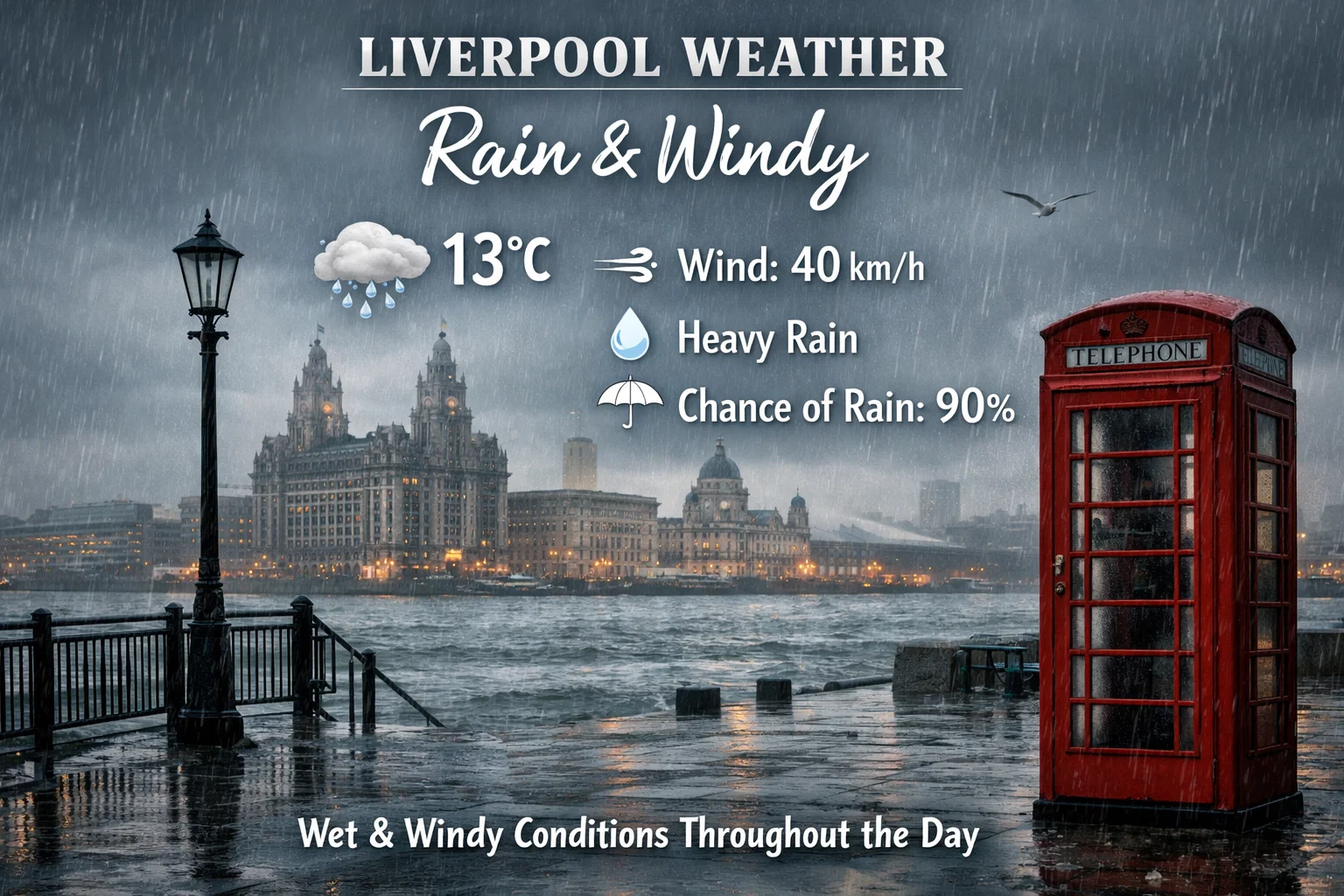
How Climate Change is Affecting Liverpool
The long-term trends in weather for Liverpool align with broader global climate change patterns. Meteorological data indicates a gradual increase in average annual temperatures, with warmer, wetter winters and hotter, drier summers becoming more pronounced. The sea level in the Mersey Estuary is slowly rising, a fact of critical importance for a city with such a significant waterfront and historic dockland infrastructure.
Extreme weather events are also a focus of study. Models suggest an increased probability of more intense rainfall events, posing challenges for urban drainage and flood management. The city council and environmental agencies are actively engaged in adaptation strategies, from sustainable urban drainage systems (SUDS) in new developments to larger-scale coastal defence planning, ensuring Liverpool remains resilient in the face of a shifting climate.
A Month-by-Month Breakdown of Liverpool Weather
The following table provides a detailed, at-a-glance overview of the typical weather Liverpool experiences each month. This data is based on long-term averages and is intended as a guide for planning; actual conditions will vary from year to year.
| Month | Avg. High (°C) | Avg. Low (°C) | Avg. Rainfall (mm) | Avg. Rainy Days | Key Characteristics & Tips |
|---|---|---|---|---|---|
| January | 7 | 2 | 73 | 14 | Coldest month, short days, frequent grey skies. Pack warm layers, a heavy coat, and a hat. |
| February | 7 | 2 | 51 | 10 | Similar to Jan, but daylight increases. Frosty mornings common. |
| March | 9 | 3 | 61 | 12 | Spring begins tentatively. Very changeable; “spring showers” are frequent. Waterproof essential. |
| April | 12 | 5 | 54 | 11 | Longer, brighter days but still cool. Famous for sudden downpours mixed with sunshine. |
| May | 15 | 8 | 58 | 10 | Often pleasant and green. Warmer, but evenings can be chilly. Ideal for park visits. |
| June | 18 | 11 | 66 | 10 | Start of summer. Long days, mild temps. Sea breezes common. Perfect for outdoor exploring. |
| July | 20 | 13 | 66 | 10 | Warmest month. Can have hot spells. Busiest tourist period. Light layers and sunscreen advised. |
| August | 20 | 13 | 69 | 11 | Similar to July. Potential for late-summer storms. Great for festivals and waterfront events. |
| September | 17 | 11 | 71 | 12 | “Second spring.” Often mild and settled early on, becoming more unsettled later. |
| October | 14 | 8 | 83 | 14 | True autumn. Significantly wetter and windier. Spectacular fall colours. Waterproof coat a must. |
| November | 10 | 5 | 78 | 15 | Damp, gloomy, and cool. Short days return. A time for museums, galleries, and cosy pubs. |
| December | 7 | 3 | 76 | 14 | Cold and dark, but festive lights cheer things up. Wrap up very warmly for Christmas markets. |
Conclusion
Ultimately, the weather in Liverpool is a character in the city’s story sometimes brooding, sometimes brilliantly cheerful, always dynamic. Its maritime heart ensures a lack of true extremes but guarantees a fascinating variability that keeps residents and visitors on their toes. By understanding its patterns, respecting its potential for swift change, and preparing accordingly,
you can fully embrace everything this magnificent city has to offer, in any season. Whether you’re tracing musical history, marveling at architectural wonders, or simply enjoying the vibrant street life, knowing how to read the skies and the forecast will only deepen your connection to this resilient, historic port. So check the latest outlook, pack your layers, and step out to experience Liverpool, come rain or shine.
Frequently Asked Questions
What is the wettest month for weather in Liverpool?
Typically, October and November are the wettest months in Liverpool, as Atlantic storm systems become more active. However, rainfall is distributed fairly evenly throughout the year, so you should always be prepared for a shower regardless of the season when checking the weather Liverpool is likely to experience.
Does Liverpool get a lot of snow?
Significant, lasting snow is relatively rare in Liverpool due to the moderating influence of the Irish Sea. While frost and ice are common in winter, the city might only see a few days of light snow or sleet each year, which rarely settles for long. Major snow events are historical exceptions rather than the rule.
When is the sunniest time to visit Liverpool?
The sunniest months are usually May, June, and July, offering the longest daylight hours and the highest likelihood of clear skies. Late spring and early summer often provide the best balance of reasonably good weather for exploring the weather Liverpool is known for without the peak summer crowds.
Is Liverpool windier than other UK cities?
Yes, Liverpool is generally considered quite windy, especially in comparison to more sheltered inland cities. Its exposed position on the Mersey Estuary facing the Irish Sea makes it a conduit for prevailing southwesterly winds. The waterfront and open areas are particularly breezy.
How accurate are long-range forecasts for Liverpool?
Due to the changeable nature of its maritime climate, long-range forecasts (beyond 5-7 days) for Liverpool’s weather have limited accuracy. It’s always best to check a reliable, updated forecast closer to your visit or planned activity. A general understanding of seasonal trends is more useful for initial planning than a specific long-range prediction.
You may also read
How Did Makka Pakka Die Phenomenon: The Truth About Makka Pakka: Debunking Rumors & Understanding