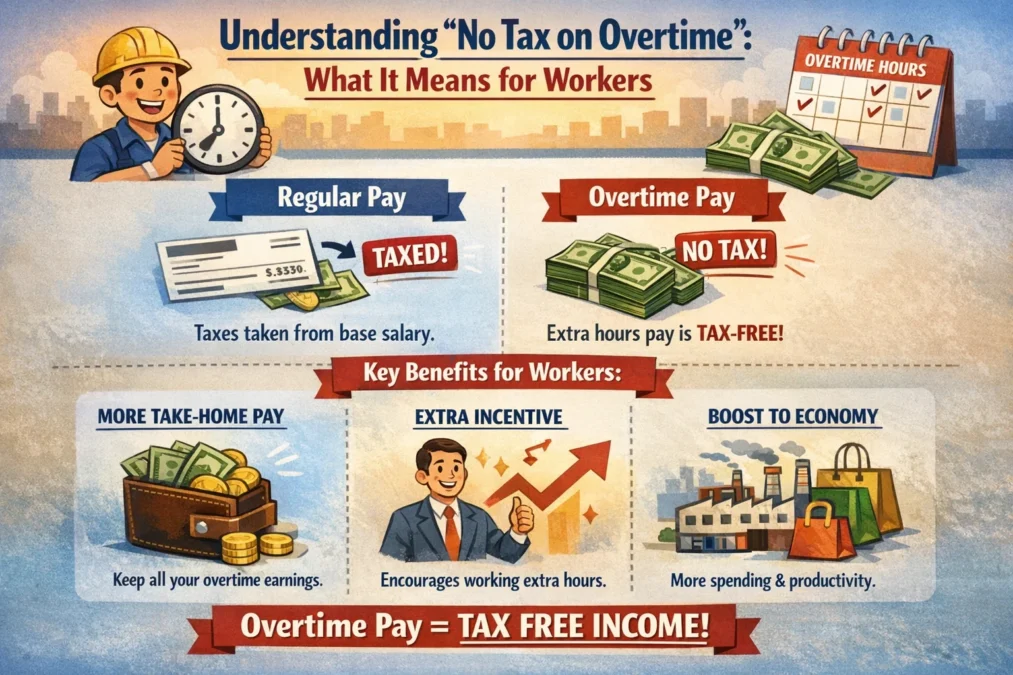
In today’s fast-paced world, many employees rely on overtime to boost their income. But what if you could earn extra hours and pay no tax on overtime? This concept may sound too good to be true, yet understanding how overtime taxation works can be a game-changer for your finances. In this article, we will explore the idea of no tax on overtime, how it affects your paycheck, and strategies to maximize your earnings.
What Is Overtime and How Is It Usually Taxed?
Overtime refers to the hours you work beyond your regular work schedule, often exceeding 40 hours a week. Most companies pay employees 1.5 times their normal hourly rate for overtime work, known as “time and a half.” However, the money you earn from overtime is typically subject to federal, state, and local taxes.
Here’s a quick breakdown:
- Regular Pay: Taxed as usual according to your income bracket.
- Overtime Pay: Also taxed as regular income, which can push you into a higher tax bracket.
- No Tax on Overtime: If applied, this means the extra earnings from overtime wouldn’t be taxed, leaving you with more take-home pay.
While the idea of no tax on overtime sounds appealing, it’s important to know that such policies are rare and usually depend on specific government incentives or employer programs.
How Some Countries Handle No Tax on Overtime
Some countries or states offer certain tax breaks for overtime work, particularly in essential sectors like healthcare, emergency services, or military work. Here’s an example of how this can work:
- Healthcare Workers: Extra hours during crises may be tax-exempt.
- Military Personnel: Overtime or hazardous duty pay may not be fully taxed.
- Low-Income Workers: Some governments exempt extra earnings to encourage hard work and provide financial relief.
This approach ensures employees are rewarded for their extra effort without facing a heavy tax burden.
Benefits of No Tax on Overtime
Having no tax on overtime can significantly impact your financial situation. Here are some key benefits:
- Higher Take-Home Pay: You keep more of the money you earn.
- Motivation to Work Extra Hours: Employees are more willing to put in additional time when it benefits them directly.
- Improved Work-Life Balance: Extra earnings can help fund vacations, education, or other personal projects without tax concerns.
- Financial Security: For families, this means more money for necessities, savings, or emergencies.
In short, the idea of no tax on overtime can boost your income without the stress of higher taxes.
Common Misconceptions About Overtime Taxes
Many workers are confused about overtime taxation. Let’s clear up some common myths:
- Myth 1: Overtime is always taxed higher.
Truth: Overtime is taxed at your normal income rate; it doesn’t have a separate higher tax rate. - Myth 2: No tax on overtime applies to everyone.
Truth: Tax exemptions are usually limited to specific programs, regions, or industries. - Myth 3: You can avoid taxes by reporting overtime differently.
Truth: Misreporting your income is illegal and can lead to penalties or fines.
Understanding these misconceptions can help you make smarter financial decisions.
Strategies to Maximize Earnings with No Tax on Overtime
Even if you don’t live in a country or state with formal no tax on overtime policies, there are ways to reduce tax liability and boost your earnings:
- Use Tax-Deferred Accounts: Contribute to retirement plans (like 401(k)) to lower taxable income.
- Claim Eligible Deductions: Work-related expenses may reduce your overall tax bill.
- Seek Employer Incentives: Some companies provide bonuses or overtime that are partially tax-free under certain programs.
- Track Work Hours Efficiently: Document overtime accurately to ensure proper pay and possible tax benefits.
With careful planning, you can enjoy more of your hard-earned money.
The Role of Employers in Overtime Tax Management
Employers play a key role in ensuring employees benefit from no tax on overtime schemes when available:
- Payroll Adjustments: Employers can set up payroll systems that comply with tax exemption rules.
- Communication: Inform employees about eligible overtime benefits.
- Government Compliance: Ensure adherence to laws regarding overtime and taxation.
A proactive employer can make a big difference in maximizing take-home pay for overtime work.
Table: Overtime Pay Comparison With and Without Tax
| Feature | With Tax on Overtime | No Tax on Overtime |
|---|---|---|
| Overtime Pay Rate | 1.5x regular rate | 1.5x regular rate |
| Tax Deduction | Yes, based on income bracket | None, fully retained |
| Take-Home Pay Example ($) | $150 for 10 hrs overtime | $200 for 10 hrs overtime |
| Employee Satisfaction | Moderate | High |
| Incentive to Work Extra | Moderate | Strong |
This simple table highlights how powerful no tax on overtime policies can be for employees’ wallets.
Challenges of Implementing No Tax on Overtime
While the concept is attractive, there are challenges:
- Government Revenue Impact: Less tax revenue for public services.
- Equity Concerns: Not all industries may qualify, leading to perceived unfairness.
- Complex Payroll Systems: Employers may struggle to adjust payroll accurately.
Despite these challenges, countries that successfully implement such policies often see improved worker satisfaction and productivity.
Future Outlook: Could There Be Widespread No Tax on Overtime?
The future of no tax on overtime policies looks promising in some sectors:
- Governments may expand exemptions to attract workers to high-demand industries.
- Digital payroll systems make it easier for companies to implement tax-free overtime.
- Employees are becoming more informed about financial planning, increasing demand for such benefits.
If these trends continue, more workers could see a world where extra effort translates to extra take-home pay without the burden of extra taxes.
Conclusion: Maximizing the Benefits of No Tax on Overtime
In summary, no tax on overtime is more than just a concept it’s a potential lifeline for employees seeking financial freedom. Whether through government programs, employer incentives, or smart financial planning, understanding how overtime and taxes interact can dramatically improve your income.
Remember:
- Stay informed about local and national tax laws.
- Track your overtime carefully.
- Explore employer and government programs offering tax relief.
By leveraging opportunities for no tax on overtime, you can make your extra work count and enjoy the rewards without unnecessary deductions. So, next time you stay late at work, you might just take home every penny you earn tax-free.
You may also read
China US Oil Trade Negotiations: A Clear and Optimistic Guide