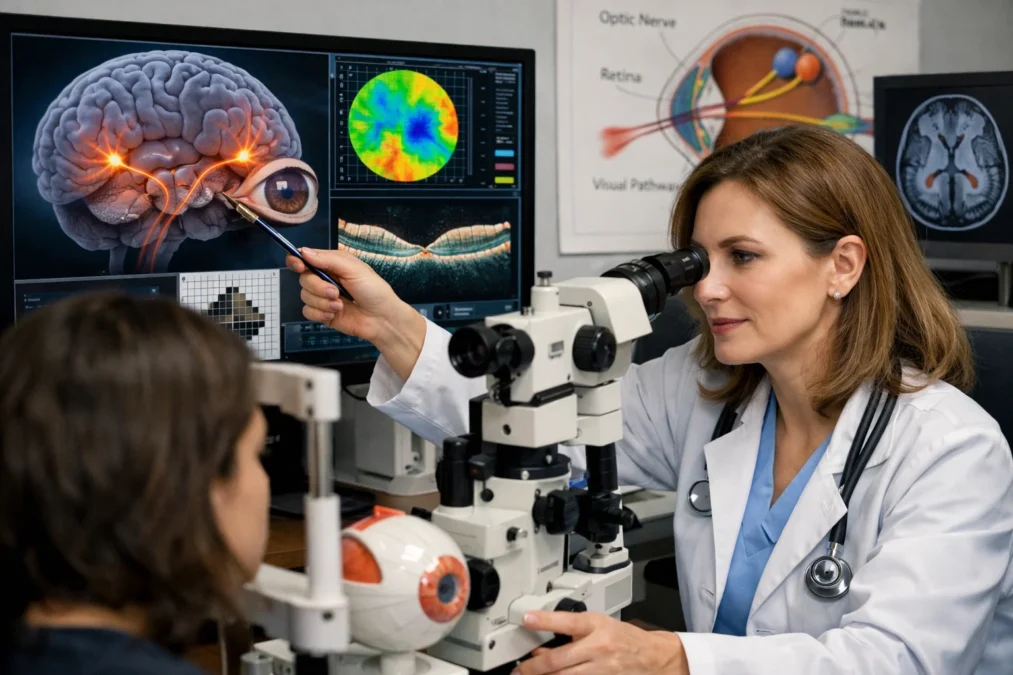
A neuro ophthalmologist is a highly trained medical specialist who sits at the crossroads of eye care and brain health. When vision problems are not just about the eyes but involve the brain, nerves, or muscles that control vision, a neuro ophthalmologist becomes the key expert. From unexplained vision loss to double vision and optic nerve disorders, this specialist helps patients understand what’s happening and, more importantly, what can be done.
In this in-depth guide, you’ll learn exactly what a neuro ophthalmologist does, when you might need one, how they are trained, and why their role is so important in modern medicine. Written in clear Grade 7 English, this article aims to be helpful, trustworthy, and easy to read no medical degree required.
What Is a Neuro Ophthalmologist?
A neuro ophthalmologist is a medical doctor who specializes in vision problems related to the nervous system. Unlike a general eye doctor, this specialist focuses on how the eyes connect to the brain and how nerve-related issues affect sight.
In simple terms:
- Ophthalmologists treat eye diseases like cataracts or glaucoma.
- Neurologists treat brain and nerve disorders.
- A neuro ophthalmologist treats vision problems caused by brain, nerve, or muscle conditions.
These doctors often handle complex cases where vision loss cannot be explained by a routine eye exam. When symptoms are confusing or don’t fit a simple pattern, a neuro ophthalmologist steps in to solve the puzzle.
Why the Neuro Ophthalmologist Is So Important
Vision is not just about the eyes. In fact, most of what we “see” is processed by the brain. That’s why a neuro ophthalmologist plays such a vital role in healthcare.
Here’s why their work matters:
- Many serious brain conditions first show signs through vision changes.
- Early diagnosis can prevent permanent vision loss.
- They often detect life-threatening issues like brain tumors or aneurysms.
In other words, a visit to a neuro ophthalmologist can protect both your eyesight and your overall health. It’s not an exaggeration to say these specialists sometimes save lives.
Common Conditions Treated by a Neuro Ophthalmologist
A neuro ophthalmologist treats a wide range of conditions. Some are rare, while others are more common than you might think.
Vision and Nerve-Related Disorders
- Optic neuritis
- Optic neuropathy
- Sudden or unexplained vision loss
- Visual field defects
Eye Movement Problems
- Double vision (diplopia)
- Eye muscle weakness
- Nerve palsies affecting eye movement
Brain-Related Vision Issues
- Brain tumors affecting vision
- Stroke-related vision loss
- Increased pressure inside the skull (papilledema)
Systemic and Autoimmune Conditions
- Multiple sclerosis-related vision problems
- Myasthenia gravis
- Thyroid eye disease
Because these conditions are complex, patients are often referred to a neuro ophthalmologist after seeing other doctors without clear answers.
Signs You May Need to See a Neuro Ophthalmologist
Sometimes, vision problems wave red flags. Knowing when to seek a neuro ophthalmologist can make a big difference.
Warning Signs to Watch For
- Sudden vision loss in one or both eyes
- Persistent double vision
- Vision problems with headaches or dizziness
- Loss of side vision
- Blurred vision with normal eye exams
If your eye doctor says your eyes look healthy, but your vision is still off, that’s often the moment a neuro ophthalmologist enters the picture.

How a Neuro Ophthalmologist Diagnoses Problems
Diagnosis in neuro ophthalmology is part science, part detective work. A neuro ophthalmologist doesn’t rush. They take time to understand symptoms and connect the dots.
Common Diagnostic Tools
- Detailed vision and eye movement exams
- Visual field testing
- MRI or CT scans
- Blood tests for autoimmune or inflammatory diseases
- Neurological exams
Unlike a standard eye test, these evaluations focus on how visual signals travel from the eye to the brain. Step by step, the neuro ophthalmologist narrows down the cause.
Education and Training of a Neuro Ophthalmologist
Becoming a neuro ophthalmologist takes years of dedication and advanced study. These doctors are among the most highly trained vision specialists.
Training Path Overview
| Stage | Description |
|---|---|
| Medical School | 4 years of medical education |
| Residency | Training in ophthalmology or neurology |
| Fellowship | Specialized neuro ophthalmology training |
| Board Certification | Exams and continued education |
In total, a neuro ophthalmologist may train for 12–14 years. That long journey ensures deep expertise and a high level of trust.
Neuro Ophthalmologist vs Other Eye Specialists
It’s easy to feel confused about which eye specialist does what. Let’s break it down clearly.
Key Differences
- Optometrist: Provides basic eye exams and glasses.
- Ophthalmologist: Performs eye surgery and treats eye diseases.
- Neuro Ophthalmologist: Treats vision problems linked to the brain and nerves.
While all are important, only a neuro ophthalmologist specializes in the complex relationship between vision and the nervous system.
Treatment Options Offered by a Neuro Ophthalmologist
Treatment depends on the cause of the problem. A neuro ophthalmologist may not always prescribe glasses or surgery. Instead, treatment often focuses on the underlying condition.
Possible Treatment Approaches
- Medications to reduce inflammation or infection
- Steroids for optic nerve conditions
- Referrals for surgery when needed
- Vision therapy or rehabilitation
- Ongoing monitoring for chronic conditions
Sometimes, reassurance is part of the treatment. When symptoms are harmless but scary, a neuro ophthalmologist explains what’s happening and eases anxiety.
What to Expect at Your First Neuro Ophthalmologist Visit
Walking into your first appointment with a neuro ophthalmologist can feel intimidating. Knowing what to expect helps calm those nerves.
Typical First Visit Includes
- Long discussion of symptoms and history
- Detailed eye and nerve exams
- Review of past scans or tests
- Plan for further testing if needed
Appointments may take longer than regular eye visits, but that time is spent carefully understanding your condition.
The Role of a Neuro Ophthalmologist in Long-Term Care
Some conditions are short-term, while others require ongoing care. A neuro ophthalmologist often becomes part of a patient’s long-term healthcare team.
Long-Term Care May Include
- Monitoring disease progression
- Adjusting treatments over time
- Coordinating with neurologists and other specialists
- Supporting vision rehabilitation
Their goal is not just to treat symptoms but to protect quality of life.
Children and the Neuro Ophthalmologist
Children can also need a neuro ophthalmologist, especially when vision problems affect development or learning.
Pediatric Conditions Treated
- Congenital optic nerve disorders
- Brain-related vision delays
- Eye movement abnormalities
- Vision loss after head injury
Early diagnosis by a neuro ophthalmologist can make a huge difference in a child’s future.
Emotional Support and Patient Trust
Vision problems can be frightening. One of the most valuable roles of a neuro ophthalmologist is offering reassurance and clarity.
They don’t just treat diseases they:
- Listen carefully
- Explain conditions in simple terms
- Help patients feel understood
This patient-centered approach builds trust and confidence, which is essential in long-term care.
Advances in Neuro Ophthalmology
The field of neuro ophthalmology is always evolving. Modern tools help a neuro ophthalmologist diagnose problems earlier and more accurately.
Recent Advances Include
- High-resolution brain imaging
- Improved visual field testing
- Better treatments for autoimmune conditions
- Stronger collaboration between specialties
These advances mean better outcomes and more hope for patients.
How to Find the Right Neuro Ophthalmologist
Choosing the right neuro ophthalmologist matters. Experience, communication, and credentials all play a role.
Tips for Choosing Wisely
- Check board certification
- Look for fellowship training
- Ask for referrals from trusted doctors
- Read patient reviews
A good neuro ophthalmologist makes patients feel informed, respected, and supported.
Frequently Asked Questions About Neuro Ophthalmologist
Is a neuro ophthalmologist a surgeon?
Some are trained in surgery, but many focus on diagnosis and medical treatment rather than operations.
Do I need a referral?
Often yes, especially for insurance reasons, but rules vary by region.
Are visits expensive?
Costs depend on location and tests required, but many visits are covered by insurance.
Can a neuro ophthalmologist cure vision loss?
Some conditions are reversible, others are not. Early diagnosis improves outcomes.
The Future of Care With a Neuro Ophthalmologist
Looking ahead, the role of the neuro ophthalmologist will only grow. As medicine learns more about the brain-eye connection, these specialists will be central to diagnosis and treatment.
Their work bridges gaps between fields, offering patients clear answers when things seem unclear. With ongoing research and innovation, the future of neuro ophthalmology looks bright.
Final Thoughts on Neuro Ophthalmologist
A neuro ophthalmologist is more than an eye doctor. They are experts in how vision, nerves, and the brain work together. When vision problems are complex, confusing, or frightening, this specialist provides answers, guidance, and hope.
By combining deep medical knowledge with careful listening, a neuro ophthalmologist helps patients protect their eyesight and overall health. If vision issues don’t make sense or don’t improve, seeing a neuro ophthalmologist could be the most important step you take for your eyes, your brain, and your peace of mind.
You may also read
Do the Driving Modes in Cadillac Lyriq Offer Different Ranges or Battery Usages?