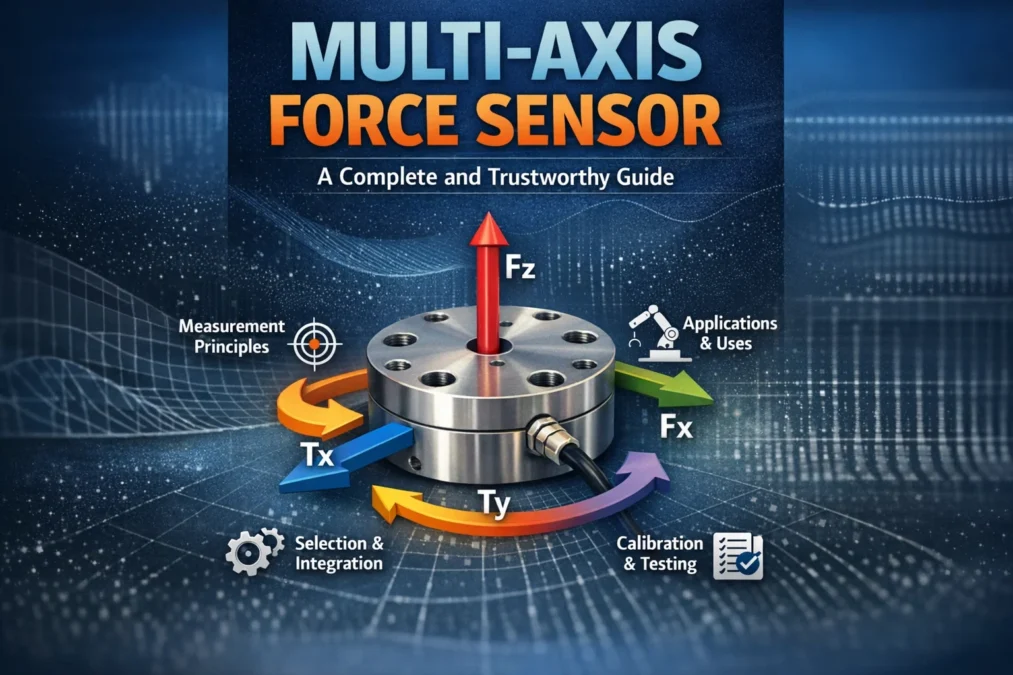
A multi-axis force sensor is one of the most important tools in modern engineering, robotics, healthcare, and industrial automation. From helping robots feel delicate objects to ensuring machines apply the right amount of pressure, this technology plays a quiet but powerful role behind the scenes. In this in-depth guide, you’ll learn what a multi-axis force sensor is, how it works, where it’s used, and why it matters so much today.
This article is written in clear Grade 7 English, with a professional yet friendly tone. By the end, you’ll have a strong understanding of the multi-axis force sensor, whether you’re a student, engineer, researcher, or curious reader.
Understanding the Basics of a Multi-Axis Force Sensor
A multi-axis force sensor is a device that can measure forces acting in more than one direction at the same time. Unlike a simple force sensor that measures force in only one direction, a multi-axis force sensor can detect forces along two, three, or even six axes.
In simple words, it can “feel” pushes, pulls, and twists coming from different directions all at once. This makes it extremely useful in complex systems where movement and force are not straight or simple.
Key points to understand:
- It measures force and sometimes torque.
- It works in multiple directions at the same time.
- It provides precise and real-time data.
Because of these abilities, the multi-axis force sensor is widely used in advanced technologies where accuracy and safety are critical.
How a Multi-Axis Force Sensor Works
To truly trust a technology, it helps to know how it works. A multi-axis force sensor uses internal sensing elements to detect mechanical stress caused by applied forces.
Most sensors work on one of these principles:
- Strain gauge technology
- Piezoelectric sensing
- Capacitive sensing
- Optical sensing
When force is applied, the internal structure slightly deforms. This deformation changes an electrical signal. The sensor then converts this signal into readable data, showing how much force is applied and in which direction.
What makes a multi-axis force sensor special is its design. It separates force components along different axes, such as:
- X-axis (left and right)
- Y-axis (forward and backward)
- Z-axis (up and down)
Some advanced sensors also measure torque around these axes, giving six degrees of freedom. Pretty impressive, right?
Types of Multi-Axis Force Sensor Technologies
Not all multi-axis force sensors are the same. Different designs serve different needs. Let’s break them down in a simple way.
Strain Gauge-Based Sensors
These are the most common type. They are reliable, accurate, and widely used in industry.
Advantages:
- High accuracy
- Long lifespan
- Well-understood technology
Limitations:
- Sensitive to temperature changes
- Requires careful calibration
Piezoelectric Sensors
These sensors generate an electric charge when force is applied.
Advantages:
- Very fast response
- Excellent for dynamic forces
Limitations:
- Not ideal for measuring constant force over long periods
Capacitive Sensors
They measure changes in capacitance caused by force.
Advantages:
- High sensitivity
- Good for low-force measurements
Limitations:
- Can be affected by humidity and dust
Optical Sensors
These use light to detect deformation.
Advantages:
- Immune to electromagnetic interference
- Very precise
Limitations:
- More expensive
- Complex setup
Each type of multi-axis force sensor has its own strengths, making it suitable for specific applications.

Key Components Inside a Multi-Axis Force Sensor
A multi-axis force sensor may look small, but it contains carefully engineered parts working together.
Main components include:
- Sensing element that deforms under force
- Signal conditioning electronics
- Protective housing
- Output interface for data transfer
The sensing element is the heart of the sensor. Its shape and material are designed to respond predictably to force. Meanwhile, the electronics clean and amplify the signal so it can be used by machines or computers.
All these components must work in harmony. Even a tiny error can lead to inaccurate readings, which is why quality design matters so much.
Applications of Multi-Axis Force Sensor in Robotics
Robotics is one of the most exciting fields using the multi-axis force sensor. Robots today don’t just move; they interact with the world.
In robotics, these sensors help robots:
- Grip objects gently without crushing them
- Detect contact with humans or surfaces
- Adjust movement in real time
- Perform delicate assembly tasks
For example, in collaborative robots (cobots), a multi-axis force sensor ensures safety. If the robot feels unexpected resistance, it can stop instantly. That’s not just smart it’s essential.
Without the multi-axis force sensor, robots would be blind to physical interaction. With it, they gain a sense of touch.
Role of Multi-Axis Force Sensor in Healthcare and Medicine
Healthcare demands precision, care, and trust. A multi-axis force sensor fits perfectly into this environment.
Common medical applications include:
- Surgical robots
- Prosthetic limbs
- Rehabilitation equipment
- Biomechanics research
In robotic surgery, these sensors allow surgeons to feel tissue resistance through robotic tools. In prosthetics, they help artificial limbs respond naturally to movement and pressure.
Here’s the human side of it: a well-designed multi-axis force sensor can help a patient walk more comfortably or help a surgeon perform a safer operation. That’s technology serving people at its best.
Industrial and Manufacturing Uses of Multi-Axis Force Sensor
Factories and production lines rely heavily on accuracy and efficiency. A multi-axis force sensor helps ensure both.
In manufacturing, these sensors are used for:
- Quality control
- Assembly force monitoring
- Tool alignment
- Product testing
For example, when assembling delicate electronics, applying too much force can damage parts. A multi-axis force sensor ensures just the right pressure is used no more, no less.
This not only improves product quality but also reduces waste and downtime. In the long run, it saves money and boosts trust in the manufacturing process.
Benefits of Using a Multi-Axis Force Sensor
There’s a reason this technology is becoming more popular every year. The benefits of a multi-axis force sensor are hard to ignore.
Major advantages include:
- High accuracy in multiple directions
- Improved safety for humans and machines
- Better control in complex systems
- Real-time feedback and monitoring
Additionally, these sensors help engineers understand how forces interact in real-world conditions. That knowledge leads to smarter designs and better performance.
In short, a multi-axis force sensor doesn’t just measure force it adds intelligence to systems.
Challenges and Limitations of Multi-Axis Force Sensor
No technology is perfect, and the multi-axis force sensor is no exception. Understanding its limitations builds realistic expectations.
Common challenges include:
- Higher cost compared to single-axis sensors
- Complex calibration process
- Sensitivity to environmental factors
- Data interpretation complexity
That said, these challenges are well-known and manageable. With proper installation, calibration, and maintenance, a multi-axis force sensor can deliver reliable results for years.
Think of it like a high-performance car it needs care, but the performance is worth it.
Choosing the Right Multi-Axis Force Sensor
Selecting the right multi-axis force sensor depends on your application. There’s no one-size-fits-all solution.
Important factors to consider:
- Number of axes needed
- Force and torque range
- Accuracy requirements
- Environmental conditions
- Size and mounting options
Before choosing, it’s wise to clearly define your needs. Are you measuring tiny forces in a lab or heavy loads in a factory? The answer guides the decision.
A well-chosen multi-axis force sensor improves performance, reliability, and user confidence.
Calibration and Maintenance of a Multi-Axis Force Sensor
Calibration ensures that a multi-axis force sensor provides accurate readings. Over time, mechanical stress and environmental changes can affect performance.
Good calibration practices include:
- Regular calibration schedules
- Using certified calibration equipment
- Following manufacturer guidelines
Maintenance is equally important. Keeping the sensor clean, protected, and properly mounted extends its life and accuracy.
With proper care, a multi-axis force sensor remains a trustworthy measurement tool for the long haul.
Future Trends in Multi-Axis Force Sensor Technology
The future of the multi-axis force sensor looks bright. As technology evolves, these sensors are becoming smaller, smarter, and more affordable.
Emerging trends include:
- Integration with AI and machine learning
- Wireless data transmission
- Improved sensitivity and durability
- Wider use in consumer products
As robots, smart devices, and automation continue to grow, the demand for reliable force sensing will only increase. The multi-axis force sensor is well-positioned to meet that demand.
Comparison Table of Multi-Axis Force Sensor Types
| Sensor Type | Accuracy | Response Speed | Best Use Case | Cost Level |
|---|---|---|---|---|
| Strain Gauge | High | Medium | Industrial and robotics | Medium |
| Piezoelectric | Very High | Very Fast | Dynamic force measurement | High |
| Capacitive | High | Fast | Low-force applications | Medium |
| Optical | Very High | Fast | Precision research | High |
This table gives a quick overview to help readers compare common multi-axis force sensor technologies.
Why the Multi-Axis Force Sensor Matters Today
In today’s fast-moving world, precision and safety are more important than ever. The multi-axis force sensor delivers both.
It allows machines to interact naturally with their environment. It helps humans stay safe around automation. And it enables innovation across industries, from healthcare to manufacturing.
Simply put, this sensor bridges the gap between mechanical systems and real-world forces.
Final Thoughts on Multi-Axis Force Sensor
The multi-axis force sensor is more than just a piece of hardware. It’s a foundation for smarter machines, safer workplaces, and better human–machine interaction. By measuring forces in multiple directions, it gives systems a sense of touch, balance, and awareness.
As industries continue to evolve, the importance of the multi-axis force sensor will only grow. Whether in robots, medical devices, or industrial machines, its role is essential and future-ready.
In closing, understanding and using a multi-axis force sensor wisely can unlock new levels of precision, reliability, and innovation making it a truly valuable technology for today and tomorrow.