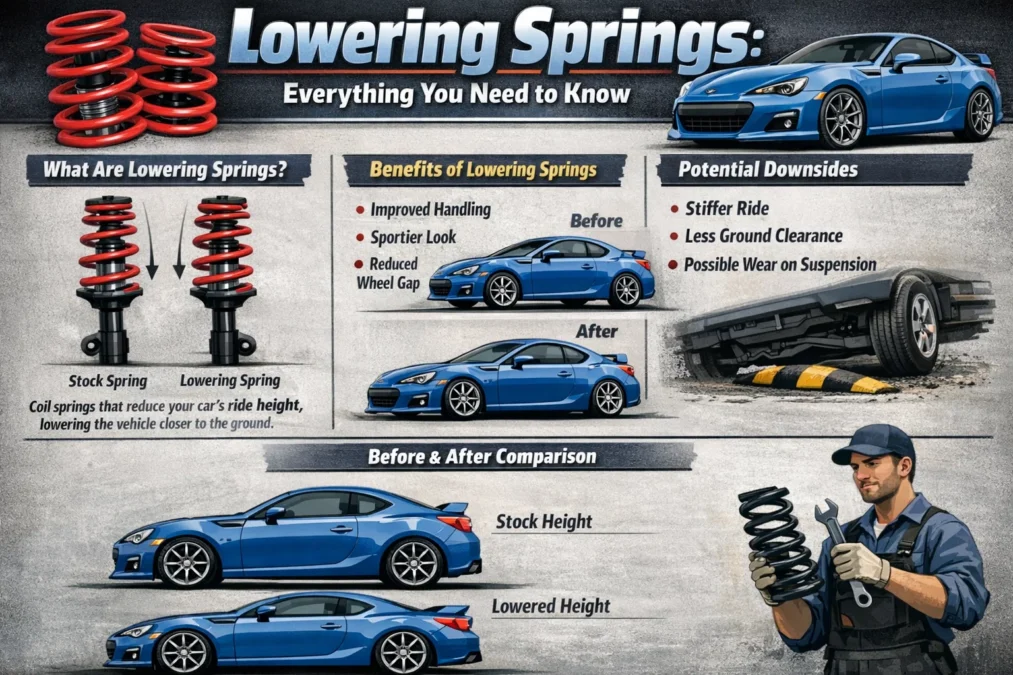
Lowering Springs If you’re passionate about cars, chances are you’ve heard about lowering springs. These little components can make a huge difference in how your vehicle looks and handles on the road. But what exactly are lowering springs, how do they work, and are they right for you? This guide will dive deep into everything you need to know about lowering springs.
What Are Lowering Springs?
Lowering springs are specially designed coil springs that replace your vehicle’s stock springs to reduce its ride height. In simpler terms, they “lower” your car closer to the ground. But lowering springs aren’t just about style they have functional benefits too.
Here’s how they work:
- Standard springs are designed for comfort and general road use.
- Lowering springs are stiffer and shorter, reducing the distance between the car body and the road.
- This change affects suspension geometry, weight distribution, and handling.
By installing lowering springs, your car will sit lower, which can improve aerodynamics and give a more aggressive, sporty look.
Benefits of Lowering Springs
The appeal of lowering springs isn’t just visual. They offer several performance advantages that car enthusiasts rave about.
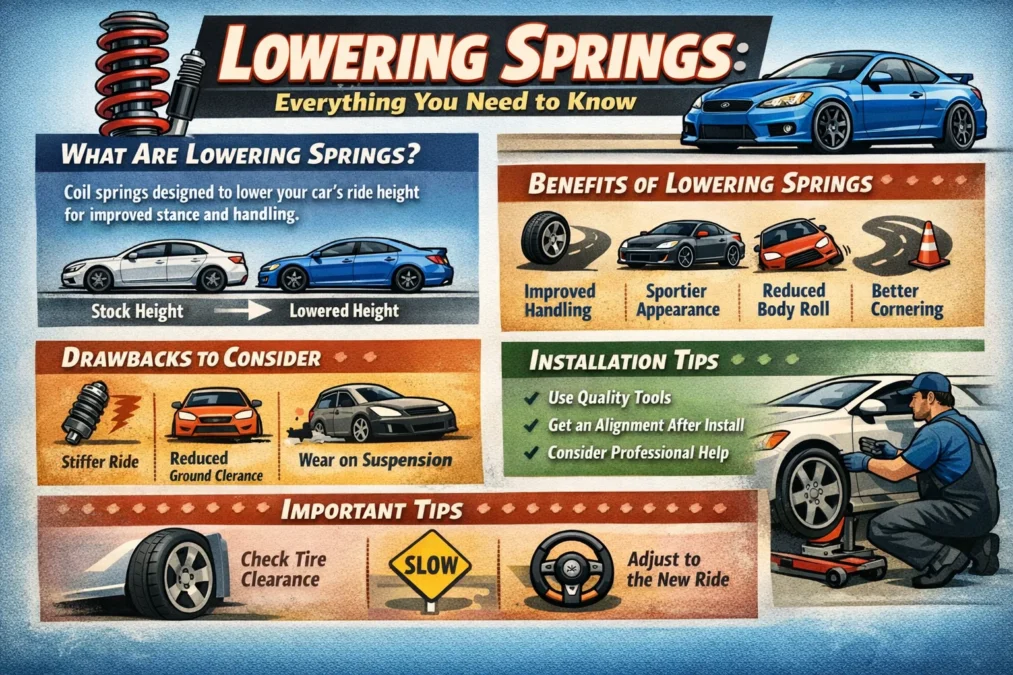
- Improved Handling: Lowering springs reduce body roll during corners, giving you more control.
- Better Aerodynamics: A lower ride height reduces air drag, potentially improving fuel efficiency.
- Enhanced Appearance: A car sitting closer to the ground looks sportier and more aggressive.
- Smoother Cornering: Stiffer springs allow for more precise steering and stability.
Of course, the benefits vary depending on your vehicle type and the quality of the lowering springs.
Types of Lowering Springs
Not all lowering springs are created equal. There are a few main types you should know:
- Performance Lowering Springs: Designed for improved handling and track performance.
- Comfort-Oriented Lowering Springs: Focus on style but still maintain a smooth ride.
- Progressive Springs: These adjust stiffness gradually, giving a balance between comfort and performance.
- Linear Springs: Provide a constant rate of stiffness, usually preferred by enthusiasts looking for precise handling.
Choosing the right type of lowering springs is crucial to match your driving style and vehicle.
How Lowering Springs Affect Ride Quality
You might be wondering: “If lowering springs are stiffer, won’t my ride become harsh?” Well, yes and no. The impact on ride quality depends on the spring design and the drop in ride height.
- A mild drop (1–1.5 inches) usually keeps the ride comfortable.
- A significant drop (2 inches or more) can make the ride stiffer and bumpier.
- High-quality lowering springs are engineered to maintain comfort while improving handling.
It’s a balancing act too soft, and you lose performance; too stiff, and you sacrifice comfort.
Installation Process of Lowering Springs
Installing lowering springs isn’t something you should rush. Proper installation ensures safety and performance. Here’s a step-by-step overview:
- Prepare the Vehicle: Lift the car using a jack and secure it on stands.
- Remove Old Springs: Carefully take out the stock coil springs.
- Install Lowering Springs: Insert the new springs, making sure they’re seated correctly.
- Check Suspension Geometry: Some vehicles require alignment adjustments after lowering springs installation.
- Test Drive: Always test drive to ensure the springs function properly and no unusual noises occur.
Professional installation is often recommended, especially if you’re new to car modifications.
Safety Considerations
While lowering springs can enhance your car’s looks and performance, safety is paramount. Here are some considerations:
- Ride Height: Avoid lowering your vehicle too much; extremely low cars risk scraping and undercarriage damage.
- Suspension Components: Lowering springs increase stress on shocks and struts; check compatibility.
- Alignment: Proper wheel alignment is crucial after installation to prevent uneven tire wear.
- Legal Restrictions: Some regions have regulations on vehicle ride height, so check local laws.
Remember, safety should never take a backseat to style or performance.
Comparing Lowering Springs and Coilovers
Many enthusiasts debate whether to go with lowering springs or coilovers. Here’s a quick comparison:
| Feature | Lowering Springs | Coilovers |
|---|---|---|
| Cost | More affordable | Expensive |
| Adjustability | Fixed ride height | Fully adjustable |
| Ride Comfort | Moderate | Can vary widely |
| Installation | Simple | More complex |
| Performance | Improved over stock springs | Superior handling potential |
In short, lowering springs are a cost-effective way to enhance your vehicle, while coilovers offer ultimate customization for serious enthusiasts.
Common Myths About Lowering Springs
There are a few myths floating around about lowering springs, and it’s important to separate fact from fiction:
- Myth 1: Lowering Springs Always Ruin Comfort – Modern springs are engineered to balance performance and comfort.
- Myth 2: Only Sports Cars Benefit – Any car can gain handling and style improvements with the right lowering springs.
- Myth 3: Lowering Springs Are Dangerous – When installed properly and paired with compatible components, they’re perfectly safe.
Understanding the facts will help you make an informed decision and avoid unnecessary worry.
Maintaining Your Lowering Springs
Once installed, lowering springs require minimal maintenance, but keeping an eye on them ensures longevity:
- Inspect springs for corrosion or damage periodically.
- Check shocks and struts for wear; lowering springs put extra stress on them.
- Ensure alignment stays correct to prevent uneven tire wear.
- Avoid harsh impacts from potholes or speed bumps to protect the springs.
Proper care means your investment will last longer and continue performing well.
Are Lowering Springs Right for You?
Deciding whether lowering springs are a good fit depends on your goals:
- Performance Enthusiast: Yes, for sharper handling and reduced body roll.
- Aesthetic Focus: Yes, for that aggressive, sporty look.
- Daily Driver: Possibly, choose comfort-oriented springs to avoid a harsh ride.
- Budget-Conscious: Lowering springs offer great performance upgrades without breaking the bank.
Consider your car type, driving habits, and budget before making a decision.
Conclusion
Lowering springs are more than just a visual upgrade they’re a blend of performance, style, and handling improvements. From improving cornering to giving your car a sportier stance, the benefits are clear. However, safety, proper installation, and regular maintenance are key to enjoying these upgrades without problems.
Whether you’re a casual car lover or a performance enthusiast, lowering springs offer a reliable and affordable way to enhance your driving experience. With the right choice and care, your car can look better, handle sharper, and turn heads wherever you go.
In the world of car modifications, lowering springs stand out as a simple yet highly effective upgrade that delivers both style and substance.
You may also read
How to Improve LCFTechMods: A Complete Expert Guide for Better Performance and User Experience