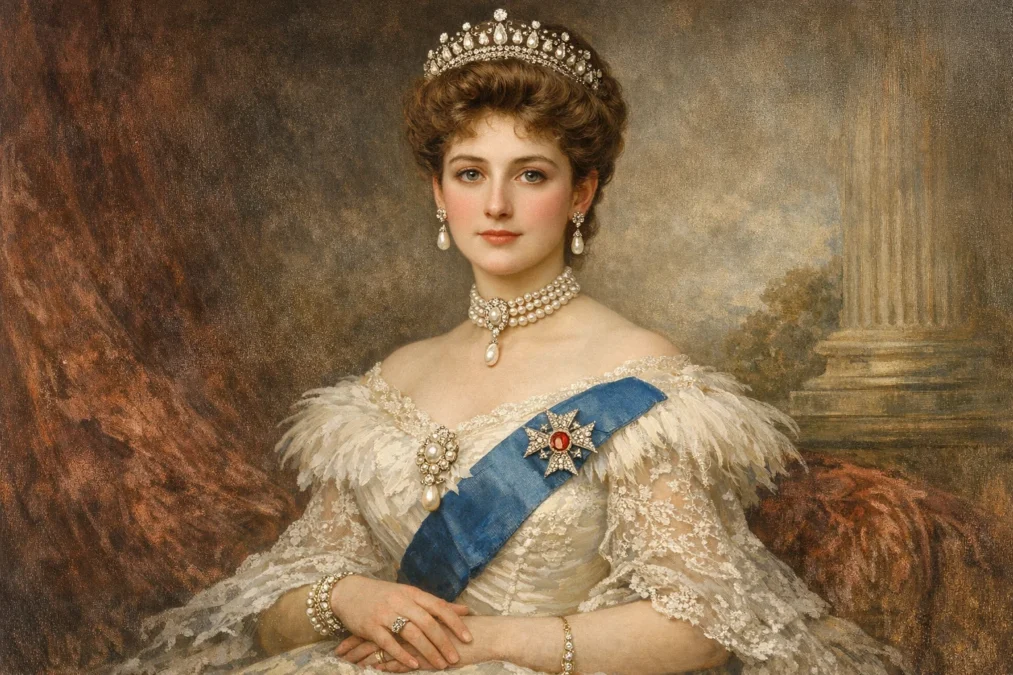
Elizabeth Mary Wilhelmina Bentinck: In the intricate tapestry of 18th-century European aristocracy, certain figures stand out not for thrones they seized, but for the pivotal connections they embodied. Among them is Elizabeth Mary Wilhelmina Bentinck, a woman whose life story is a fascinating study of dynastic ambition, political alliance, and personal resilience. Born into the powerful Dutch and English Bentinck family, her existence bridged continents, cultures, and some of the most powerful courts of her age.
While her name may not dominate common history texts, the world of Elizabeth Mary Wilhelmina Bentinck offers a captivating window into the private engines of public history the strategic marriages, the international networks, and the quiet influence wielded by well-positioned women in a man’s world. This deep dive unravels her journey from her illustrious birth to her complex marital alliances, positioning her not merely as a footnote but as a consequential node in the web of European nobility.
Elizabeth Mary Wilhelmina Bentinck was more than a bearer of a prestigious name; she was a key asset in her family’s diplomatic arsenal. To understand her life is to understand the Bentincks themselves a family that rose from Dutch nobility to become indispensable advisors to the British crown. Her story intersects with the Hanoverian succession, the politics of the Holy Roman Empire, and the glittering, often ruthless, social world of London and The Hague.
This article reconstructs her narrative from scattered genealogical records, historical correspondence, and the broader context of her era. We will explore her lineage, her marriages, her progeny, and the lasting imprint of her bloodline, establishing a comprehensive portrait of a true 18th-century noblewoman. In doing so, we illuminate the often-overlooked mechanisms of power and continuity that shaped modern Europe’s aristocratic landscape.
The Illustrious Bentinck Lineage
The profound significance of Elizabeth Mary Wilhelmina Bentinck begins with the formidable family she was born into. The Bentinck dynasty originated in the Netherlands, where they were established nobles, but their fate became irrevocably tied to British history. The pivotal figure was William Bentinck, 1st Earl of Portland, a close confidante and indispensable diplomat for William of Orange.
He played a crucial role in orchestrating the Glorious Revolution of 1688, which placed William and his wife Mary on the English throne. For his loyalty and service, he was lavishly rewarded with English titles and vast estates, cementing the Bentincks as a transcontinental powerbroker family with deep roots in both Dutch and English soil.
This dual identity defined Elizabeth Mary Wilhelmina Bentinck from her birth. She was a product of this elite, politically agile family that operated in the highest echelons of power. Being a Bentinck meant inherent political responsibility, immense wealth, and the constant expectation to serve the family’s ascending status through strategic behavior.
The family’s holdings spanned from the Netherlands to England, giving them a unique perspective and influence in European affairs. For a daughter like Elizabeth, this legacy bestowed immense privilege but also predetermined her primary societal role: that of a marital bridge to further consolidate power, forge alliances, or settle political scores.

A Noble Birth and Early Life
Elizabeth Mary Wilhelmina Bentinck entered the world in the winter of 1735, the daughter of William Bentinck, 1st Count Bentinck, and his wife, Charlotte Sophie of Aldenburg. Her father was a descendant of the 1st Earl of Portland and a significant figure in his own right, serving in high diplomatic posts. Her mother brought her own illustrious lineage from the German nobility, connecting Elizabeth to the complex patchwork of states within the Holy Roman Empire. From her earliest days, she was immersed in an environment of polyglot conversations, international politics, and the nuanced etiquette of multiple courts.
Her upbringing would have been meticulously designed for a woman of her station. While formal education for women was often limited, daughters of great families were taught languages certainly French, the lingua franca of aristocracy, as well as Dutch, English, and likely German.
She would have been schooled in genealogy, music, dance, and the art of correspondence, all essential tools for managing a large household and engaging in the social diplomacy expected of her. The early life of Elizabeth Mary Wilhelmina Bentinck was a preparation for a singular destiny: to be married advantageously, thereby extending her family’s reach and influence across the European noble network.
The Strategic Marriage to Count von Wallmoden
In 1752, at the age of seventeen, Elizabeth Mary Wilhelmina Bentinck fulfilled her dynastic duty by marrying Johann Ludwig, Reichsgraf von Wallmoden-Gimborn. This union was a classic piece of aristocratic strategy. Wallmoden was an illegitimate son of King George II of Great Britain, born of the monarch’s long-term mistress, Amalie von Wallmoden. Though illegitimate, he had been recognized, ennobled by the Holy Roman Emperor, and possessed considerable standing, particularly within the Electorate of Hanover, which was in personal union with the British crown. The marriage effectively tied the Bentinck family closer to the Hanoverian royal line.
For Elizabeth, this marriage meant a transition from her Anglo-Dutch familial base to a life centered in the German states. As Countess von Wallmoden, she managed his estates and participated in the court life of Hanover. The match underscored how the Bentinck family leveraged its connections, using Elizabeth Mary Wilhelmina Bentinck to solidify a link to royalty, albeit through its unofficial branch. This move enhanced the family’s prestige and political capital within the Germanic sphere, demonstrating the intricate ways bloodlines and marriages were used to build and maintain influence across a fragmented Europe.
Dynastic Contributions and Motherhood
The primary measure of success for a noble marriage in this era was the production of legitimate heirs to carry on the title and secure the estate. In this, Elizabeth Mary Wilhelmina Bentinck proved successful. She and Count von Wallmoden had several children, ensuring the continuation of the Wallmoden line. Their offspring inherited a unique blend of bloodlines: the solid, service-oriented aristocracy of the Bentincks and the distant, regal cachet of the Hanoverians. These children were assets, themselves destined for future alliances.
Her role as a mother was central to her identity and societal function. She would have overseen the early education and upbringing of her children, instilling in them the values and awareness of their hybrid heritage. Through them, the influence of Elizabeth Mary Wilhelmina Bentinck extended into the next generation. Her daughters would enter the marriage market with valuable connections, and her sons would bear the Wallmoden name forward, often into military or diplomatic service for Hanover or Britain, perpetuating the cycle of aristocratic duty and interconnection.
Life at the Crossroads of Hanoverian Politics
Residing as a countess in Hanover placed Elizabeth Mary Wilhelmina Bentinck at a dynamic political crossroads. Hanover was not just a German electorate; it was the continental possession of the British monarchs. Its court was a hub of intrigue, where English, German, and broader European interests constantly intersected. Her husband’s unique position as the king’s acknowledged son gave the family notable prominence, albeit with the nuanced status of being part of the royal periphery.
In this environment, Elizabeth’s courtly duties were a form of soft diplomacy. Hosting, corresponding, and participating in the social season were not mere frivolities but essential political activities. Through these engagements, she would have helped maintain her family’s and by extension, Britain’s favor and intelligence within the German states. The life of Elizabeth Mary Wilhelmina Bentinck in Hanover was thus one of performed prestige, where every social interaction reinforced networks of loyalty and influence critical to the geopolitical stability of the era.
The Bentinck Family Network and Her Place Within It
To fully appreciate her position, one must view Elizabeth Mary Wilhelmina Bentinck as a node within the vast Bentinck network. Her siblings and cousins made similarly strategic marriages, creating a web of alliances across Britain and Europe. One notable relation was her brother, William Bentinck, 4th Earl of Portland, who would later serve as Prime Minister of Great Britain. This connection kept her indirectly tied to the very center of British political power, even while she lived in Germany.
Her life exemplifies the “family enterprise” model of aristocracy. Individual fates were subordinate to collective advancement. The marriage of Elizabeth Mary Wilhelmina Bentinck to Wallmoden was one piece of a larger puzzle. Another sibling might marry into the French nobility, while a cousin secured a bishopric. Her existence contributed to the family’s resilience and adaptability, ensuring that whether power shifted in London, The Hague, or Vienna, a Bentinck connection would be nearby. She was both a product and an agent of this relentless dynastic strategy.
Later Years and the Shadows of History
The latter years of Elizabeth Mary Wilhelmina Bentinck are less vividly documented, as is common for women of her time once their childbearing and primary marital diplomatic roles were complete. She likely spent her later life managing her widow’s dower properties or residing with adult children, involved in the lives of her grandchildren. The great political events of her lifetime the Seven Years’ War, the American Revolution, the rise of Napoleon would have formed the tumultuous backdrop to her personal world, impacting her family’s fortunes and the fates of the states they served.
Her death in 1822 marked the passing of a woman who had lived through an astonishing period of change. From her birth in the early 18th century to her death in the 19th, she witnessed the transformation of Europe from an age of absolute monarchy to the dawn of the revolutionary era. While she may not have been a historical actor on the public stage, the quiet, consistent presence of individuals like Elizabeth Mary Wilhelmina Bentinck provided a thread of continuity. Their lives, dedicated to family, duty, and the maintenance of social structures, formed the stable fabric against which the drama of history played out.
The Wallmoden Legacy and Art Collection
One of the most tangible legacies stemming from Elizabeth’s marriage is the notable art collection assembled by her husband, Johann Ludwig von Wallmoden. An avid collector, he amassed a significant number of paintings and antiquities, forming the Wallmodensche Sammlung (Wallmoden Collection). This collection, which included works from Italian Renaissance masters and classical artifacts, was one of the most important private collections in northern Germany. It later became a foundational part of the collection of the Kunstmuseum in Hanover.
While the collection is credited to her husband, the stability of their household and the management of their resources, which would have fallen partly to Elizabeth Mary Wilhelmina Bentinck as the countess, provided the conditions for such patronage to flourish. The existence of this great collection adds a cultural dimension to her story. It moves her narrative beyond mere genealogy into the realm of cultural history, showing how the unions she embodied also facilitated the preservation and appreciation of art, leaving a legacy that outlasted political alliances.
Semantic Context and Historical Importance
When historians seek to understand the “how” of European aristocratic cohesion, lives like that of Elizabeth Mary Wilhelmina Bentinck provide the answer. The keyword is not just a name but a concept representing the innumerable women who were the glue of the old regime. Semantic variations like “Bentinck daughter,” “Countess von Wallmoden,” or “Hanoverian noblewoman” all point to the same idea: a person whose identity was relational, forged through family and marriage. Her importance is cumulative and collective.
Her story corrects the misconception that women in this period were entirely powerless. While they operated within severe constraints, their marital alliances were the bedrock of statecraft. The strategic union of Elizabeth Mary Wilhelmina Bentinck was a diplomatic act with material consequences. It transferred wealth, created loyalties, and birthed new generations who would inherit these intertwined obligations. In this light, she becomes a case study in the deployment of social capital, a vital component of pre-modern political systems.
Genealogical Significance and Modern Descendants
The genealogical impact of Elizabeth Mary Wilhelmina Bentinck is profound. Through her children, her bloodline disseminated into various German noble families, such as the von Görtzes and the von der Schulenburgs. Given the interconnectedness of European royalty, it is almost certain that her descendants today are scattered among the extant nobility and, through subsequent marriages, may even have links to modern royal houses. Her lineage is a tributary feeding into the great river of European aristocratic genealogy.
For modern genealogists and descendants, Elizabeth Mary Wilhelmina Bentinck represents a crucial link. She connects the Bentinck family of Britain and the Netherlands to the German Grafliche (comital) families and, distantly, to the British royal family through her husband’s paternity. Tracing a line to her opens a door to a wide array of historical lineages. This ongoing relevance in family history research ensures that her name continues to be studied and remembered, a testament to the enduring fascination with the networks she helped weave.
A Comparative View: Bentinck Marriages in the 18th Century
Placing Elizabeth’s marriage within the broader pattern of Bentinck family alliances reveals a consistent strategic playbook. The family used marriages to secure political favor, settle debts, and expand its geographic influence. Unlike some families that might concentrate on a single court, the Bentincks diversified, creating a robust, multinational network. Elizabeth’s match into the Hanoverian sphere was a key part of this diversification strategy, ensuring the family had “insiders” in a realm critically linked to the British monarchy.
| Bentinck Family Member | Spouse | Primary Alliance/Outcome |
|---|---|---|
| Elizabeth Mary Wilhelmina Bentinck | Johann Ludwig, Graf von Wallmoden | Solidified link to Hanoverian court/British royal illegitimate line; German estate consolidation. |
| William Bentinck, 4th Earl of Portland | Dorothy Cavendish | Deepened alliance with the powerful Cavendish family (Dukes of Devonshire); key for Whig party political power in Britain. |
| Lord Edward Bentinck | Elizabeth Cumberland | Connection to a branch of the British royal family (descended from George II), reinforcing domestic royal ties. |
| Charlotte Bentinck | John West, 2nd Earl De La Warr | Alliance with another English peerage family, strengthening the family’s landed and political base in England. |
This table illustrates that the union of Elizabeth Mary Wilhelmina Bentinck was not an isolated event but a deliberate move in a complex family strategy. Each marriage served a specific purpose, whether domestic political consolidation, royal connection, or continental expansion. Her assignment was the latter, anchoring the family firmly within the Germanic political landscape.
Unanswered Questions and Historical Mysteries
Despite the records, many personal aspects of Elizabeth Mary Wilhelmina Bentinck’s life remain shrouded. Her personal correspondence, if it exists, is likely buried in German or family archives. We have little direct insight into her thoughts on her marriage, her feelings about moving from her familial home, or her personal interests. Was she a reluctant participant in this dynastic plan, or did she embrace her role with a sense of duty and pride? The historical silence on these matters is typical but leaves room for historical imagination.
These gaps, however, are themselves instructive. They remind us that the historical record is often skewed toward the public deeds of men. The inner lives of women like Elizabeth Mary Wilhelmina Bentinck were rarely deemed important enough to preserve systematically. Reconstructing her world, therefore, requires reading between the lines of official documents marriage contracts, birth records, estate accounts and using social history to infer the contours of her experience. The mystery surrounding her personality only heightens the intrigue of her structural role in history.
The Enduring Fascination with Aristocratic Women
The story of Elizabeth Mary Wilhelmina Bentinck taps into a lasting fascination with aristocratic women of history. They are often portrayed in fiction as pawns or romantic figures, but reality was more nuanced. They were managers, negotiators, and bearers of cultural tradition. In an era before professional diplomacy, a marriage like Elizabeth’s was a diplomatic treaty, and she was its chief human representative. Her ability to navigate the court of Hanover, manage a transnational household, and raise children to understand their complex heritage required significant skill and intelligence.
As one historian of nobility aptly put it, “A successful noble marriage was the period’s most sophisticated joint venture, merging capital, social credit, and political futures.” This quote encapsulates the world of Elizabeth Mary Wilhelmina Bentinck. She was an executive in this venture, tasked with the day-to-day operations of maintaining the alliance her marriage created. This reframing moves her from a passive subject to an active, though context-limited, participant in shaping her world, making her story more resonant and worthy of recovery.
Conclusion: Reclaiming a Pivotal Life
In retracing the path of Elizabeth Mary Wilhelmina Bentinck, we do more than fill a genealogical gap. We restore a sense of agency and importance to a life lived according to the strictest rules of its time. Her journey from a Bentinck daughter to a Wallmoden countess was a microcosm of 18th-century aristocratic Europe a world where personal identity was deeply entwined with family strategy and where women’s power was exercised in the private sphere to achieve public ends.
She was a connector, a linchpin in a vast network that stabilized the political order of an era.Ultimately, the legacy of Elizabeth Mary Wilhelmina Bentinck endures in the historical threads she helped spin. Through her children, her family’s sustained influence, and the very fact that we are piecing her story together centuries later,
she achieved a form of immortality. She represents the countless individuals whose quiet, dutiful lives formed the essential infrastructure of history. By understanding her, we gain a richer, more complete understanding of how power, lineage, and society functioned in the age of aristocracy, long before the modern world took shape.
Frequently Asked Questions
Who was Elizabeth Mary Wilhelmina Bentinck in simple terms?
Elizabeth Mary Wilhelmina Bentinck was an 18th-century noblewoman, born into the powerful Anglo-Dutch Bentinck family. She is historically significant for her strategic marriage to Count Johann Ludwig von Wallmoden, an illegitimate son of King George II, which linked her family to the Hanoverian royal line and cemented their influence in German territories.
What was the significance of her marriage to Count von Wallmoden?
The marriage of Elizabeth Mary Wilhelmina Bentinck to Count von Wallmoden was a classic dynastic alliance. It served to strengthen the Bentinck family’s political ties to the court of Hanover, which was personally connected to the British monarchy. This union elevated her status to Countess and integrated the Bentincks deeper into the fabric of German nobility, providing them with lasting influence in continental affairs.
Did Elizabeth Mary Wilhelmina Bentinck have any notable children?
Yes, Elizabeth Mary Wilhelmina Bentinck had several children with Count von Wallmoden. Their offspring carried forward the Wallmoden title and married into other prominent German noble families. Through these descendants, the bloodlines and diplomatic connections forged by Elizabeth and her husband were propagated, extending her genealogical impact across the European aristocracy for generations.
How does her story help us understand 18th-century aristocracy?
The life of Elizabeth Mary Wilhelmina Bentinck is a perfect case study in the mechanics of aristocratic power. It illustrates how elite families used the marriages of their daughters as primary tools for building political alliances, consolidating wealth, and extending their geographic reach. Her story shifts focus from kings and battles to the vital, behind-the-scenes social engineering that sustained the old regime.
Where can I learn more about the Bentinck family history?
To learn more about the context of Elizabeth Mary Wilhelmina Bentinck, reputable sources include peerage works like Burke’s Peerage, historical studies on the Dutch and English nobility, and academic articles on Hanoverian court culture. The archives of the Dutch Hoge Raad van Adel and the British National Archives also hold relevant family papers and correspondence that detail the Bentinck family’s extensive network.
You may also read
Marina Fogle: The Woman Beside Ben Fogle A Story of Partnership, Family, and Shared Adventure