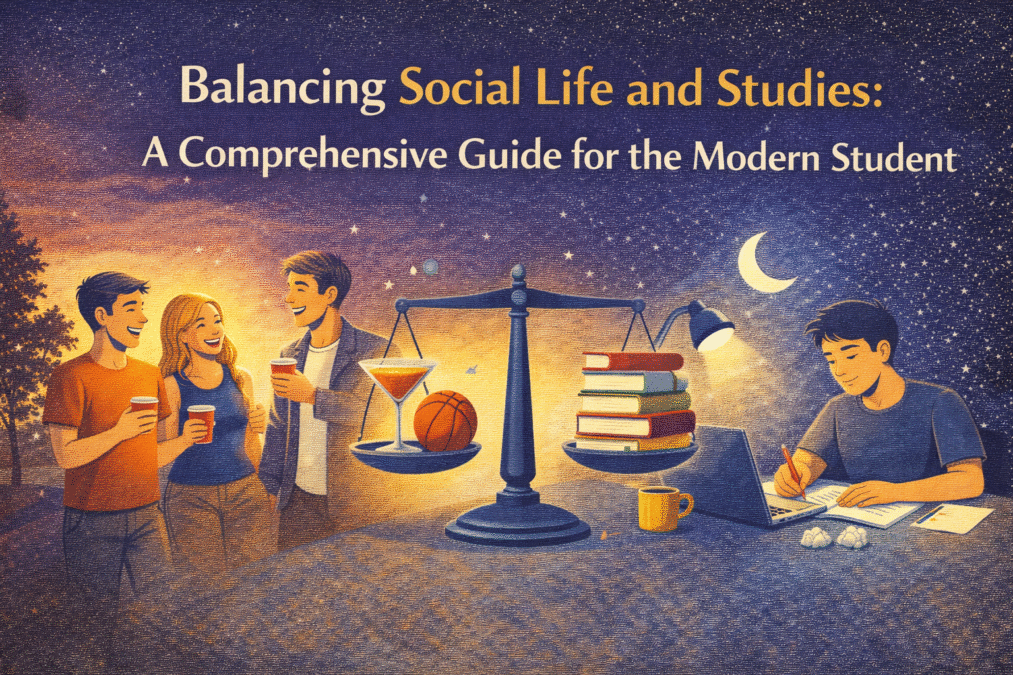
University life is often described as a three-way tug-of-war between academics, social life, and sleep. For the modern student, this pressure is amplified by the digital age where the fear of missing out (FOMO) on social events competes with the high stakes of academic performance. Finding a middle ground isn’t just about time management; it’s about protecting your mental well-being while ensuring your future career stays on track.
In this guide, we will explore how to master the “study-life balance” without sacrificing your grades or your sanity.
The Myth of the “Perfect” Balance
The first thing to understand is that balance is not a static 50/50 split. Some weeks, like during freshers’ fortnight, your social life will take center stage. Other weeks, specifically during midterms or finals, your textbooks will be your closest companions.
The goal is to prevent one side from completely eclipsing the other for too long. When academic stress becomes overwhelming, many students find that seeking professional essay writing help is a strategic way to regain control. By delegating a particularly complex task, you free up the mental bandwidth needed to engage with your peers and recharge your batteries, which actually makes you more productive in the long run.
1. Master the Art of the “Academic Sprint”
Many students spend eight hours in the library but only do two hours of actual work. The rest is spent scrolling through social media or chatting. This is the worst of both worlds: you aren’t having fun, and you aren’t being productive.
- The Pomodoro Technique: Work for 25 minutes, then take a 5-minute break. After four rounds, take a longer break.
- Deep Work: Identify your “golden hours” the time of day when your brain is sharpest and protect that time for your hardest assignments.
- Active Recall: Instead of just reading, quiz yourself. You’ll learn faster and finish sooner.
2. Treat School Like a 9-to-5 Job
If you treat your studies like a full-time job, you’ll find that your evenings and weekends are suddenly “guilt-free.” Try to stay on campus or in a coffee shop between lectures to finish your reading and research. Once 5:00 PM or 6:00 PM hits, close the laptop. This clear boundary prevents “study guilt” from ruining your time with friends.
3. Quality Over Quantity in Socializing
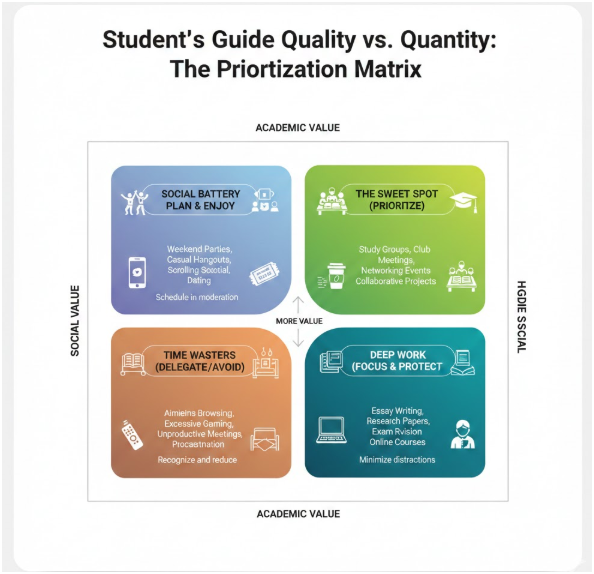
You don’t have to attend every single gathering to have a great social life. In fact, “social burnout” is a real phenomenon.
- Schedule “Big” Events: Pick one or two major social events a week that you really care about.
- Micro-Socializing: Grab a quick coffee between classes or eat dinner with your housemates. These small interactions provide the social “fix” you need without eating up a whole evening.
4. Refining Your Work for Better Efficiency
One of the biggest time-wasters in student life is the “endless edit.” You finish a draft, but you spend days agonizing over the phrasing, tone, and flow. This is where modern technology becomes a lifesaver. Using a specialized essay rewriter can help you see your work from a different perspective, suggesting clearer ways to phrase your arguments.
Instead of staring at a paragraph for two hours, these tools help you polish your language quickly, allowing you to hit “submit” and head out to meet your friends with total confidence in your work.
5. Learn the Power of “No”
It sounds simple, but saying “no” is a superpower. If you have a 3,000-word paper due on Monday, saying no to a Friday night party isn’t “missing out” it’s an investment in your peace of mind on Sunday.
Pro Tip: If you find it hard to say no, offer an alternative. “I can’t come out tonight because I’m finishing an assignment, but let’s grab brunch on Sunday morning!”
6. The Role of Physical Health
You cannot balance your life if your body is failing. Sleep deprivation and a diet of instant noodles will lead to brain fog, making a one-hour essay take three hours.
- Sleep: Aim for 7–8 hours. Your brain processes what you learned during sleep.
- Movement: Even a 20-minute walk can boost your serotonin and focus.
- Hydration: Your brain is roughly 75% water; even mild dehydration leads to fatigue.
7. Utilize Your Support Systems
You are not in this alone. Most universities have writing centers, peer mentoring groups, and mental health resources. If you feel the scales tipping too far toward academic failure, reach out to your tutors early. Similarly, if your social life is making you feel isolated or overwhelmed, talk to a counselor.
Why “Strategic Outsourcing” is Not a Red Flag
In the professional world, people delegate tasks all the time. Managers hire assistants, and businesses hire consultants. As a student, utilizing resources to help you understand a topic better or to refine a draft is simply a form of academic management.
Using tools or services to assist with your workload isn’t about “taking the easy way out”; it’s about managing a high-pressure environment effectively. When you have a solid support system whether it’s a study group, a tutor, or a writing service you are less likely to experience the burnout that causes many students to drop out or underperform.
Summary Checklist for a Balanced Week
| Task | Action |
| Sunday Night | Look at your calendar. Mark all deadlines and social events. |
| Daily | Complete at least 3 hours of “Deep Work.” |
| Social | Have at least one face-to-face interaction that isn’t about school. |
| Refinement | Use editing tools to polish drafts quickly rather than over-analyzing. |
| Self-Care | Get outside for at least 30 minutes. |
Conclusion
The secret to a successful university experience isn’t about being a hermit or being the life of every party. It’s about intentionality. Be intentional when you study so that you can be fully present when you socialize. By using the tools available to you from time-management apps to professional writing assistance you can navigate the complexities of student life with ease.
About Author Bio
Lachlan Nguyen “I am an academic consultant and content strategist at MyAssignmentHelp, where I focus on developing practical tools and resources to help students navigate the complexities of university life. With a background in educational psychology and years of experience in the academic support industry, I’m passionate about bridging the gap between heavy workloads and student well-being.