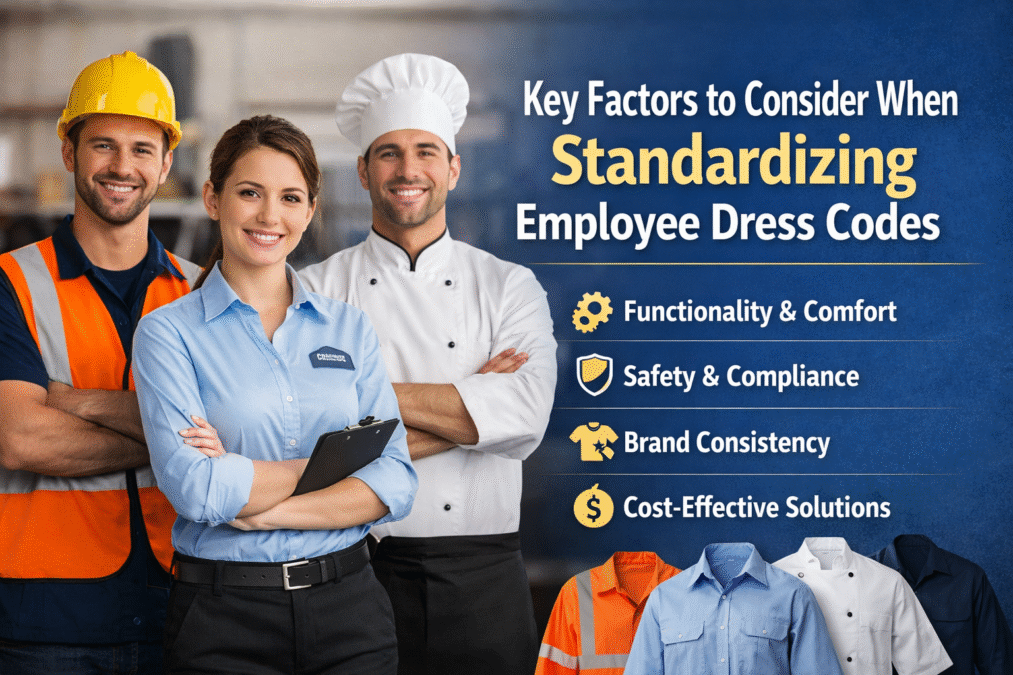
Creating a standardized employee dress code is more than just selecting outfits it’s about aligning your workforce with your company’s identity, safety standards, and operational needs. A well-designed dress code enhances professionalism, improves employee comfort, and reinforces brand recognition. Many businesses choose to work with a professional uniform manufacturer to ensure their attire meets both functional and branding requirements.
Functionality Should Come First
The primary purpose of any workwear is functionality. Employees should be able to perform their tasks efficiently without being restricted by their clothing. Whether it’s a construction site, a corporate office, or a hospitality setting, uniforms must be tailored to the specific duties of the role.
For example, workers in physically demanding environments require breathable, durable fabrics, while office staff may need polished yet comfortable attire. Investing in custom work shirts ensures that employees have clothing suited to their daily responsibilities.
Comfort Drives Productivity
Comfort is often overlooked, yet it plays a crucial role in employee performance. Uncomfortable uniforms can lead to distractions, reduced morale, and even decreased efficiency.
Key elements to consider include:
- Fabric breathability
- Proper fit and sizing options
- Seasonal adaptability
When employees feel comfortable in what they wear, they are more confident and focused throughout the day.
Safety and Compliance Are Non-Negotiable
In many industries, employee attire is directly linked to safety. From flame-resistant fabrics to high-visibility clothing, uniforms must comply with industry regulations and standards.
Employers should:
- Identify workplace hazards
- Choose materials that offer protection
- Ensure compliance with local safety laws
Collaborating with an experienced uniform provider helps businesses meet these critical safety requirements without compromising on style or comfort.
Brand Consistency and Professional Image
A standardized dress code plays a vital role in shaping how customers perceive your business. Consistent uniforms create a cohesive brand image and make employees easily recognizable.
Elements that contribute to brand consistency include:
- Company colors
- Logo placement
- Style uniformity across departments
A professional appearance not only builds trust with clients but also fosters a sense of unity among employees.
Customization for Different Roles
Not all employees perform the same tasks, so a one-size-fits-all approach rarely works. Customization allows businesses to maintain consistency while addressing the specific needs of different roles.
For instance:
- Front-facing staff may require more polished attire
- Technical staff may need functional, durable clothing
- Managers might have slightly differentiated uniforms
This balance ensures practicality without losing brand identity.
Cost-Effectiveness and Longevity
While quality uniforms may require a higher upfront investment, they often prove more cost-effective over time. Durable materials and expert craftsmanship reduce the need for frequent replacements.
Businesses should consider:
- Fabric durability
- Ease of maintenance
- Long-term value over initial cost
Partnering with a trusted uniform manufacturer ensures that your investment delivers lasting results.
Employee Input and Acceptance
A successful dress code isn’t just imposed it’s accepted. Involving employees in the selection process can lead to higher satisfaction and better compliance.
Simple ways to gather feedback include:
- Surveys
- Trial runs of uniform options
- Open discussions
When employees feel heard, they are more likely to embrace the new standards.
Conclusion
Standardizing employee dress codes is a strategic decision that impacts productivity, safety, and brand perception. By focusing on functionality, comfort, safety, and consistency, businesses can create uniforms that serve both operational and branding purposes.
Working with a professional uniform manufacturer and investing in thoughtfully designed apparel such as custom work shirts tailored to your team’s needs ensures that your dress code is not only practical but also a true reflection of your brand.