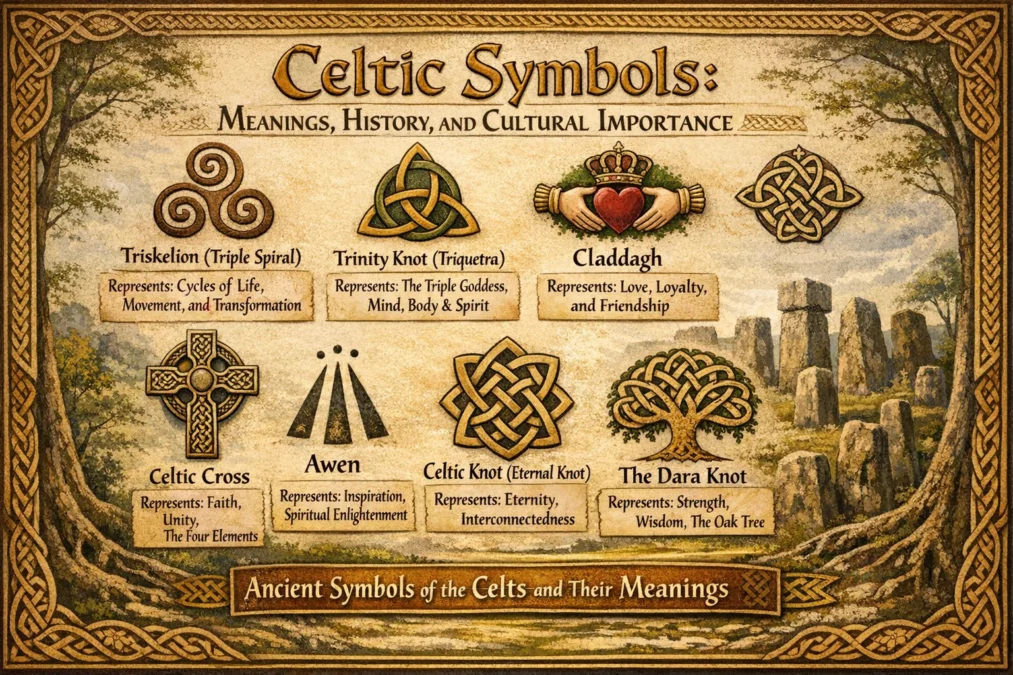
Celtic symbols are some of the most beautiful and meaningful designs in the world. These ancient patterns come from the Celtic people who lived in parts of Europe many centuries ago. Even today, celtic symbols appear in art, jewelry, tattoos, architecture, and cultural celebrations.
Many people love celtic symbols because they are not just decorative designs. Each symbol tells a story. Some represent love, protection, faith, and eternity. Others show the deep connection between humans, nature, and the spiritual world.
In this article, we will explore the history, meanings, and importance of celtic symbols. We will also learn about the most famous designs and why they are still popular today.
The History of Celtic Symbols
The story of celtic symbols begins with the ancient Celtic tribes. These tribes lived across parts of Europe, especially in Ireland, Scotland, Wales, and parts of France and Spain. Their culture dates back more than 2,000 years.
The Celts were known for their strong traditions, creative art, and deep spiritual beliefs. They believed that nature, the sun, the moon, and the earth all had special powers. Because of this belief, many celtic symbols reflect natural cycles and spiritual ideas.
Early Celtic artists carved these symbols into:
- Stone monuments
- Jewelry
- Weapons
- Clothing
- Religious objects
Later, many celtic symbols were also drawn in beautiful manuscripts like the famous Book of Kells, created by monks in Ireland during the Middle Ages.
These designs often use endless loops and knots. The lines never stop or break. This style represents eternity and the endless cycle of life.
Why Celtic Symbols Are Still Popular Today
You might wonder why celtic symbols are still popular thousands of years later. Well, the answer is simple. These symbols are powerful, meaningful, and timeless.
People today use celtic symbols in many ways:
- Tattoos
- Jewelry and necklaces
- Wedding rings
- Home decorations
- Clothing designs
Many people choose these designs because they want a symbol that represents love, family, faith, or personal strength.
Another reason is that celtic symbols look beautiful and mysterious. Their looping patterns create art that feels both ancient and modern at the same time.
Common Characteristics of Celtic Symbols
Before learning about individual celtic symbols, it is helpful to understand their unique style.
Most Celtic designs share a few important features:
Endless Knots
The lines in many celtic symbols never end. This represents eternity, unity, and the never-ending journey of life.
Interwoven Patterns
Many symbols contain lines that weave over and under each other. This shows the connection between life, nature, and the spiritual world.
Circular Shapes
Circles appear often in celtic symbols. A circle represents unity, completeness, and protection.
Spiritual Meaning
The Celts believed symbols held magical or spiritual power. Because of this, many celtic symbols were used for protection or blessings.
Famous Celtic Symbols and Their Meanings
Below are some of the most famous celtic symbols and what they represent.
The Celtic Knot
The Celtic knot is one of the most recognizable celtic symbols in the world.
This design uses endless loops that never start or end.
Meaning of the Celtic Knot:
- Eternity
- Interconnection of life
- Spiritual growth
- Love without end
Celtic knots appear in ancient manuscripts, stone carvings, and modern jewelry. Many couples even use them in wedding rings to symbolize eternal love.
The Trinity Knot (Triquetra)
The Trinity Knot, also called the Triquetra, is another well-known example of celtic symbols.
It consists of three connected loops forming a triangular shape.
Possible meanings include:
- Life, death, and rebirth
- Mind, body, and spirit
- The Holy Trinity in Christianity
Because of its deep spiritual meaning, the Trinity Knot appears in both ancient pagan and Christian art.
The Celtic Cross
The Celtic Cross is one of the most powerful celtic symbols in Irish and Scottish culture.
This symbol combines a traditional Christian cross with a circle around the center.
Meanings include:
- Faith and spirituality
- Unity between heaven and earth
- Protection and guidance
You can find Celtic crosses in churches, graveyards, and historic monuments across Ireland and Scotland.
The Claddagh Symbol
The Claddagh is one of the most famous celtic symbols related to love and friendship.
It shows two hands holding a heart topped with a crown.
Each part has a special meaning:
| Symbol Part | Meaning |
|---|---|
| Hands | Friendship |
| Heart | Love |
| Crown | Loyalty |
Claddagh rings are often used as friendship rings, engagement rings, or wedding rings.
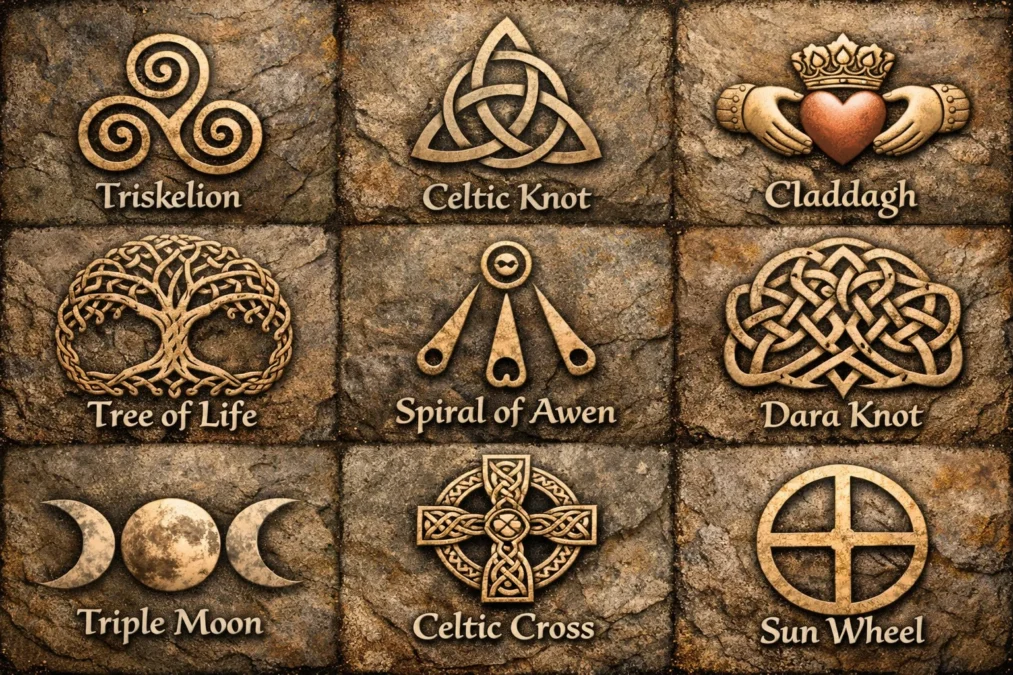
The Celtic Tree of Life
The Tree of Life is another meaningful design among celtic symbols.
This symbol shows a tree with branches reaching toward the sky and roots growing deep into the earth.
It represents:
- Balance between heaven and earth
- Strength and wisdom
- Growth and rebirth
- Connection to nature
The Celts believed trees were sacred and acted as bridges between the human world and the spirit world.
A Quick Guide to Popular Celtic Symbols
Here is a simple table showing several common celtic symbols and their meanings.
| Celtic Symbol | Meaning | Cultural Importance |
|---|---|---|
| Celtic Knot | Eternity and unity | Represents endless life |
| Trinity Knot | Spiritual balance | Connected to pagan and Christian beliefs |
| Celtic Cross | Faith and protection | Important religious symbol |
| Claddagh | Love, loyalty, friendship | Popular in jewelry |
| Tree of Life | Balance and growth | Sacred symbol of nature |
| Celtic Spiral | Life cycles and movement | One of the oldest Celtic designs |
Celtic Symbols in Ancient Art and Architecture
When we look at ancient monuments, we often see celtic symbols carved into stone.
These designs appear on:
- Ancient standing stones
- Church walls
- Grave markers
- Metal objects
- Decorative shields and weapons
Celtic artists loved to fill spaces with beautiful patterns. They used curved lines, spirals, and knots to create detailed designs.
One famous example is the artwork inside ancient Irish manuscripts. The pages contain colorful celtic symbols woven into letters, animals, and decorative patterns.
Celtic Symbols in Jewelry and Tattoos
Today, celtic symbols are very popular in jewelry and tattoo art.
People choose these designs because they carry deep meaning and cultural history.
Popular Celtic Symbol Jewelry
Many types of jewelry use Celtic designs, including:
- Necklaces
- Bracelets
- Rings
- Earrings
Claddagh rings and Trinity Knot necklaces are especially common.
Celtic Symbol Tattoos
Tattoo artists often use celtic symbols because of their strong lines and timeless designs.
Common tattoo ideas include:
- Celtic knots representing eternal love
- Celtic crosses for faith and protection
- Tree of Life tattoos symbolizing growth
- Spiral symbols showing life’s journey
Each tattoo tells a personal story while honoring Celtic heritage.
Spiritual and Cultural Meaning of Celtic Symbols
One of the most fascinating things about celtic symbols is their spiritual meaning.
The Celtic people believed that symbols could connect the physical world to the spiritual world.
Many designs represent ideas such as:
- Balance in life
- The circle of nature
- Protection from harm
- Wisdom and knowledge
- Eternal love and loyalty
Even today, people use celtic symbols to remind themselves of these powerful values.
The Role of Celtic Symbols in Irish and Scottish Heritage
For people with Irish or Scottish roots, celtic symbols are more than just designs. They are part of cultural identity.
These symbols appear during cultural celebrations such as:
- St. Patrick’s Day
- Highland festivals
- Traditional weddings
- Family crests and coats of arms
They help people stay connected to their heritage and history.
Many families proudly display celtic symbols in their homes or wear them as jewelry to honor their ancestors.
How Celtic Symbols Inspire Modern Design
Believe it or not, celtic symbols influence modern design in many ways.
You can see their impact in:
- Fashion and clothing patterns
- Logo design
- Book illustrations
- Architecture
- Digital art
Designers love the balance and harmony found in Celtic patterns. The flowing lines make artwork look elegant and timeless.
Because of this, celtic symbols continue to inspire artists around the world.
Tips for Choosing Celtic Symbols
If you are thinking about using celtic symbols in jewelry, tattoos, or art, here are a few helpful tips:
Learn the Meaning
Before choosing a symbol, understand what it represents. Each design has a special message.
Respect the Culture
These symbols come from a rich cultural history. It is important to appreciate their meaning and background.
Choose Personal Significance
Select celtic symbols that reflect your own values, beliefs, or life story.
Keep the Design Simple
Celtic designs can become very detailed. Sometimes simple versions look cleaner and more elegant.
The Timeless Beauty of Celtic Symbols
What makes celtic symbols so special is their timeless beauty. Even after thousands of years, they still capture the imagination of people around the world.
These symbols remind us of important ideas such as:
- Love that never ends
- The strength of family
- The balance of nature
- The connection between past and present
Because of their deep meaning and artistic style, celtic symbols continue to inspire art, culture, and personal expression today.
Conclusion
In conclusion, celtic symbols are much more than decorative patterns. They are powerful signs filled with history, culture, and spiritual meaning.
From the famous Celtic Knot to the meaningful Claddagh and the sacred Tree of Life, each design tells a story about life, love, and connection.
For thousands of years, people have used celtic symbols to express beliefs, protect loved ones, and celebrate heritage. And even today, these ancient designs remain popular in jewelry, tattoos, art, and architecture.
As we continue to explore the past and appreciate cultural traditions, celtic symbols will always remind us that some ideas like love, unity, and eternity never fade away.