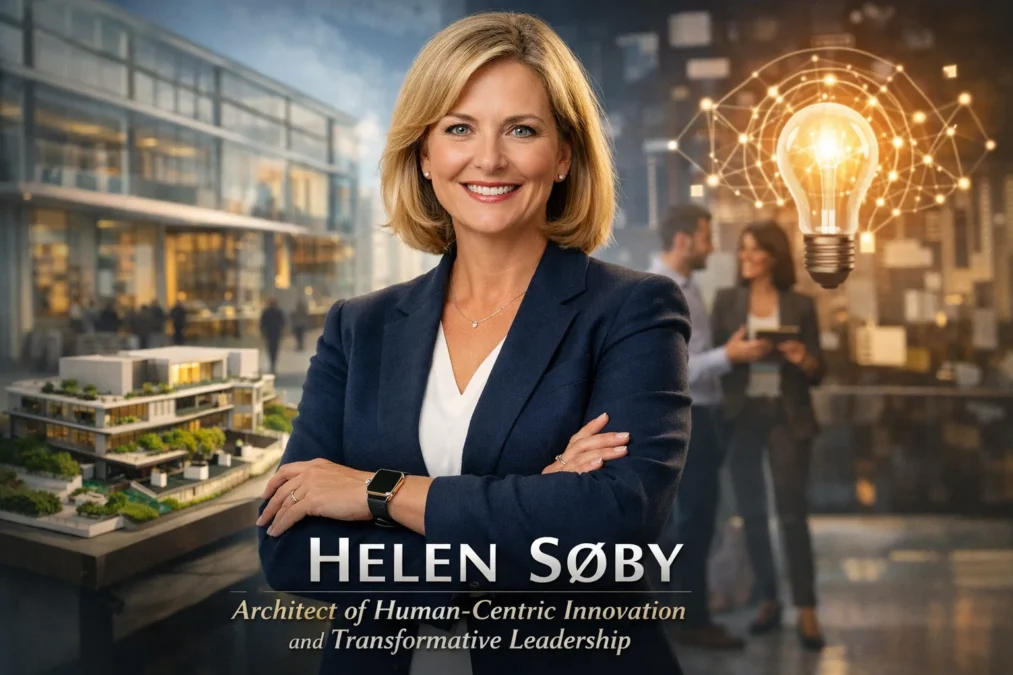
Helen Søby In a world saturated with rapid technological change and complex organizational challenges, a distinct voice emerges one that places profound human understanding at the core of progress. That voice belongs to Helen Søby, a visionary thinker and practitioner whose work transcends traditional disciplinary boundaries. More than just a name, Helen Søby represents a comprehensive philosophy, a strategic lens through which to view design, leadership, and systemic innovation.
Her approach is not about isolated methods but about cultivating a foundational mindset that prioritizes empathy, context, and meaningful impact over mere efficiency or aesthetic trends. This article delves into the essence of Helen Søby’s contributions, unpacking the principles that make her a sought-after authority for enterprises seeking sustainable growth and authentic human connection in their products, services, and internal cultures. To understand the trajectory of modern human-centered strategy is to engage with the ideas pioneered by Helen Søby.
The Foundational Philosophy of Human-Centered Systems
At the heart of Helen Søby’s work lies a radical reconception of where value is created. She argues that the most resilient and innovative systems whether a digital product, a public service, or a corporate structure are those built from a deep understanding of human narratives, emotions, and unarticulated needs. This goes beyond surface-level user testing; it involves ethnographic immersion and a commitment to seeing people as whole beings within complex ecosystems. For Søby, every interaction is part of a larger story, and design’s role is to thoughtfully shape that narrative towards empowerment and clarity.
This philosophy directly challenges reductionist, output-focused models that have long dominated business and technology sectors. Søby posits that treating users or employees as mere data points or task-completers leads to fragile solutions that fail under real-world pressure. Instead, her human-centered systems thinking encourages leaders and designers to embrace ambiguity, to listen actively, and to co-create solutions with the communities they intend to serve. It is a shift from designing for people to designing with them, a subtle but monumental change in agency and outcome that defines the Helen Søby methodology.
Bridging Emotional Intelligence and Strategic Execution
A common misconception is that human-centered approaches are “soft” or lack rigorous strategic underpinning. Helen Søby’s framework dismantles this false dichotomy by seamlessly integrating deep emotional intelligence with hard-nosed business acumen. She demonstrates how empathy, when properly channeled, becomes a powerful strategic tool for risk mitigation, opportunity identification, and brand loyalty construction. Understanding latent user frustrations, for instance, isn’t just about being kind it’s about discovering unmet market needs before competitors do.
The practical application of this bridge is in what Søby often calls “translating insight into architecture.” This means taking the qualitative, often subjective, data gathered from human engagement and constructing actionable blueprints, governance models, and measurable objectives. It requires a leader to be bilingual, fluent in both the language of human experience and the language of organizational KPIs. The work of Helen Søby provides the lexicon and grammar for this translation, ensuring that compassion and profitability are seen as mutually reinforcing forces, not opposing ones.
The Role of Contextual Immersion in Discovery
Helen Søby is a fervent advocate for leaving the boardroom and entering the real-world environments where people live and work. Contextual immersion is non-negotiable in her process. This involves observing and engaging with individuals in their natural settings, whether that’s a home, a hospital ward, or a factory floor. The goal is to uncover the tacit knowledge and environmental constraints that never surface in a formal interview or survey, revealing the intricate dance between human behavior and physical or digital space.
These immersive journeys yield what Søby terms “contextual catalysts” specific environmental or situational triggers that explain why people behave the way they do. A product might fail not because of its features, but because of the lighting conditions in which it’s used, or the social stigma attached to it. By identifying these catalysts, teams can move beyond solving superficial symptoms and address the root causes of user challenges. This insistence on ground-truth reality is a hallmark of the rigorous approach championed by Helen Søby, ensuring solutions are not just theoretically sound but practically resilient.
Designing for Adaptive Resilience Over Static Solutions
In a volatile world, Søby argues that the ultimate goal of design is not to create a perfect, final product, but to build adaptive capacity. This means designing systems, interfaces, and organizations that can learn, evolve, and respond to unexpected change. Instead of brittle solutions that break when conditions shift, her philosophy fosters resilience the ability to absorb disruption and reconfigure for continued function. This principle applies equally to software platforms, community programs, and leadership teams.
This focus on adaptation requires a fundamental shift in mindset from “project completion” to “system stewardship.” Teams influenced by Helen Søby’s teachings build in feedback loops, modular components, and governance that allows for continuous iteration. They view their creations as living entities in a dynamic relationship with their users. The measure of success becomes not just launch metrics, but long-term sustainability and the system’s ability to mature gracefully over time, a testament to the foresight embedded in its initial architecture.
Leadership as a Facilitative and Enabling Practice
Helen Søby’s vision of leadership diverges sharply from the charismatic, top-down commander model. She frames leadership as a facilitative practice focused on enabling others, removing systemic obstacles, and creating the conditions for collective intelligence to flourish. A leader, in her view, is a curator of environment and culture, someone who sets a clear, human-centered intent and then empowers teams to find the best path to achieve it. This requires humility, trust, and a shift from giving orders to asking powerful questions.
This enabling model directly impacts innovation velocity and employee engagement. When teams feel psychologically safe and are given autonomy within a well-defined frame of human-centric purpose, they take ownership and creative risks. The leader’s role becomes one of providing resources, protecting the team from organizational noise, and synthesizing diverse inputs. This approach, deeply associated with the principles of Helen Søby, cultivates organizations that are more agile, more inventive, and more attuned to the human elements of work, leading to lower burnout and higher retention.

The Integration of Ethical Foresight in Innovation
A critical and often overlooked strand in Søby’s work is the imperative of ethical foresight. She insists that considering the long-term societal and individual consequences of a new product or policy is not a final review step, but a foundational design parameter. This involves asking uncomfortable “what if” questions early and often: How could this be misused? What unintended behavioral changes might it encourage? Does it increase equity or exacerbate divides? For Helen Søby, responsible innovation is impossible without this proactive ethical interrogation.
This practice moves ethics from a compliance checklist to a creative, generative space. By mapping potential future harms and benefits, teams can innovate toward positive outcomes and design safeguards directly into the system’s architecture. It’s about building moral considerations into the very DNA of a solution. In an age of rising concern over data privacy, algorithmic bias, and technological alienation, the ethical framework provided by Helen Søby offers a vital compass for navigating innovation’s complex moral landscape.
Cultivating a Culture of Continuous Learning and Unlearning
A human-centered organization, according to Søby, is fundamentally a learning organization. It must institutionalize the practices of continuous discovery, reflection, and adaptation. This goes beyond quarterly training sessions; it means creating rituals and rhythms for sharing field insights, celebrating intelligent failures, and challenging long-held assumptions. It requires what Søby calls “strategic unlearning” the deliberate effort to let go of processes or beliefs that no longer serve the human context, even if they are historically successful.
This culture is fueled by curiosity and a rejection of dogma. Teams are encouraged to stay perpetually curious about the people they serve, treating every project as a new learning journey rather than the application of a stale formula. The influence of Helen Søby is evident in organizations that document and share “user stories” as avidly as financial reports, where leadership allocates time and budget for exploratory research, and where the question “What did we learn?” carries as much weight as “What did we ship?”
The Strategic Value of Narrative and Sense-Making
Helen Søby places immense strategic value on the art of narrative and sense-making. In a deluge of data points and user feedback, the ability to craft a coherent, compelling story about what is happening and why it matters is what drives alignment and action. She teaches that data informs, but stories inspire and create shared meaning. A well-crafted narrative about a user’s journey can unite a marketing team, an engineering team, and a support team around a common purpose more effectively than any set of requirements.
This narrative work is also how complex insights are translated for stakeholders. Søby’s methods often involve creating tangible personas, journey maps, and scenario-based stories that make abstract human needs concrete and memorable. These aren’t just presentation tools; they are sense-making devices that allow large groups to hold a complex truth in their minds collectively. The strategic use of narrative, a key tenet of the Helen Søby approach, turns fragmented observations into a powerful catalyst for organizational focus and empathetic decision-making.
Applying Human-Centered Principles to Organizational Design
The principles Helen Søby advocates are reflexively applied to the organizations that seek to implement them. She advises that to design human-centric experiences for external customers, a company must first design a human-centric environment for its internal employees. This means examining and redesigning internal processes from hiring and onboarding to performance reviews and project management through the same lens of empathy, respect, and ease of use. The employee experience is seen as the foundation of the customer experience.
This can manifest in flattened communication structures, flexible work arrangements designed around human rhythms rather than industrial-age clocks, and tools that empower rather than monitor. It means viewing employees not as resources to be optimized, but as partners in the mission with their own needs, aspirations, and contexts. When an organization embodies the philosophy of Helen Søby internally, it authenticates its external promises, creating a virtuous cycle where engaged employees naturally create better experiences for users.
A Comparative Lens: Traditional vs. Human-Centered Strategy
The transformative impact of Helen Søby’s philosophy becomes starkly clear when contrasted with traditional organizational and design strategies. The following table breaks down the core differences in approach, highlighting the paradigm shift she champions.
| Strategic Dimension | Traditional / Industrial-Age Approach | Human-Centered Approach (Informed by Helen Søby) |
|---|---|---|
| Primary Focus | Internal efficiency, cost reduction, output volume. | External human value, meaningful impact, outcome quality. |
| Source of Truth | Historical data, market averages, executive opinion. | Real-time contextual immersion, user narratives, lived experience. |
| View of People | Users/employees as predictable agents or resources (“headcount”). | Users/employees as complex, emotional partners with evolving contexts. |
| Innovation Driver | Technological capability and competitive benchmarking. | Deeply understood human needs, desires, and pain points. |
| Process Mindset | Linear, stage-gate (“waterfall”), focused on rigid planning. | Iterative, cyclical, agile, focused on learning and adaptation. |
| Success Metrics | ROI, speed to market, feature completion, uptime. | User satisfaction, engagement depth, behavioral change, well-being. |
| Leadership Style | Command-and-control, directive, top-down decision-making. | Facilitative, enabling, servant leadership, distributed decision-making. |
| Ethical Consideration | An afterthought or a compliance/PR function. | A foundational design parameter integrated from the outset. |
| Response to Failure | Problem to be punished, hidden, or avoided. | Learning opportunity to be analyzed and shared openly. |
| Organizational Structure | Siloed departments with specialized, isolated functions. | Cross-functional, collaborative teams aligned around human outcomes. |
The Tangible Impact on Product and Service Innovation
The application of Helen Søby’s principles directly revolutionizes how products and services are conceived and evolved. Instead of starting with a technological solution in search of a problem, teams start by immersing themselves in the daily lives of their prospective users. This leads to innovations that feel intuitive and indispensable because they are woven into the fabric of real human routines and address genuine struggles. The product roadmap becomes a direct response to a curated set of human stories and aspirations.
Furthermore, this approach dramatically reduces the risk of costly, post-launch failures. By continuously testing prototypes and concepts with real people throughout the development cycle not just at the end teams can pivot early and often. They invest in features that truly matter and abandon those that are technologically impressive but humanly irrelevant. The legacy of Helen Søby is evident in products that users love and advocate for, not because of clever marketing, but because they demonstrably improve some aspect of the human condition.
Building Sustainable Competitive Advantage Through Empathy
In an era where features and pricing can be copied almost overnight, Søby articulates how deep, institutional empathy becomes the ultimate, non-replicable competitive advantage. A competitor can mimic a product’s interface, but they cannot easily copy the profound cultural mindset, the ingrained habit of listening, and the authentic stakeholder relationships that produced it. This empathetic capability allows an organization to anticipate market shifts and human needs faster and more accurately than any algorithm or trend report alone could.
This advantage is sustainable because it is rooted in culture and continuous learning, not a single patent or star individual. It creates a magnetic pull for both talent and customers who are increasingly drawn to organizations with purpose and authenticity. As one industry leader familiar with her work noted, “Adopting Helen Søby’s framework wasn’t about a new project methodology; it was about rewiring our company’s nervous system to be more attuned to the human signals we had been filtering out. That attunement is now our single greatest asset.” This encapsulates the transformative business case for her human-centric vision.
Navigating the Common Pitfalls and Misconceptions
As with any profound shift, adopting a human-centered approach guided by Helen Søby’s principles is fraught with potential misunderstandings. A major pitfall is conflating it with simply “being nice” or collecting user opinions via surveys and calling it research. Søby emphasizes that true human-centered work is rigorous, sometimes uncomfortable, and challenges pre-existing power structures. It may reveal that a pet project of leadership is misguided, requiring the courage to act on that insight.
Another common misconception is that it’s a slow, expensive process that hinders speed. Søby counters that while the initial discovery investment is critical, it ultimately saves vast resources by preventing the development of unwanted or flawed products. It replaces the slow, catastrophic failure of a market flop with rapid, small-scale learning cycles. The key is to integrate the practice rhythmically into the organizational workflow, not treat it as a one-off, pre-project event. Avoiding these pitfalls is crucial to successfully implementing the wisdom of Helen Søby.
The Future Trajectory of Human-Centered Practice
Looking forward, Helen Søby’s ideas are poised to become even more critical as technologies like artificial intelligence, biometrics, and immersive media become pervasive. The ethical and human interaction challenges will only grow more complex. Søby’s framework provides the essential grounding a reminder that no matter how advanced the tool, its purpose must be interrogated through a human well-being lens. The next frontier involves applying her principles to the design of AI interactions, algorithmic governance, and blended physical-digital realities.
The trajectory points toward a deeper integration of neuroscience, behavioral economics, and systems thinking into the human-centered toolkit. It also suggests a growing importance for the role of the “human-centered strategist” within executive teams a role that embodies the synthesis of empathy, ethics, and enterprise that Helen Søby exemplifies. Her ongoing work continues to push the boundaries, ensuring that as we build the future, we remain anchored to the timeless complexities and dignities of human experience.
Conclusion: The Enduring Legacy of a Human-Centric Compass
The exploration of Helen Søby’s philosophy reveals a comprehensive system for navigating the complexities of the modern world. Her work provides far more than a set of design techniques; it offers a moral and strategic compass oriented toward genuine human value. In championing contextual immersion, ethical foresight, facilitative leadership, and adaptive resilience, she has crafted a robust alternative to the impersonal, efficiency-at-all-costs models of the past.
The impact of engaging with the ideas of Helen Søby is a transformation in perspective from seeing people as metrics to understanding them as the very source of meaning, innovation, and sustainable success. Her enduring legacy is the growing community of leaders, designers, and organizations who choose to measure their impact not just in revenue, but in the positive resonance they create in human lives.
Frequently Asked Questions
How would you define the core methodology of Helen Søby?
The core methodology of Helen Søby is a holistic, human-centered systems approach that integrates deep empathetic research with rigorous strategic execution. It begins with contextual immersion to understand people’s unarticulated needs and behaviors, then translates those insights into adaptive, ethically-grounded solutions for products, services, and organizational structures, always prioritizing long-term human value over short-term gains.
What industries can benefit most from applying these principles?
While universally applicable, industries undergoing rapid digital transformation or facing profound trust and engagement challenges benefit immensely. This includes healthcare, financial services, education, technology, public sector services, and any consumer-facing business. Any field where understanding complex human behavior is critical to success will find value in the framework developed by Helen Søby.
How does this approach handle quantitative data and business metrics?
Contrary to myth, the human-centered philosophy of Helen Søby does not reject quantitative data; it re-contextualizes it. Metrics are essential for measurement, but they are informed and given meaning by qualitative human insights. The approach seeks a balance, using stories to explain the “why” behind the numbers and using numbers to track the scale of human impact identified through research.
What is the first step for an organization wanting to adopt this mindset?
The first, most critical step is a commitment from leadership to embrace a learning mindset and empower teams to engage directly with users or employees. It often starts with a focused, small-scale pilot project like redesigning an internal process or a single customer journey touchpoint using immersive research methods. This builds tangible proof of concept and organizational muscle memory for the Helen Søby-inspired approach.
Can this human-centered approach scale in a large, global enterprise?
Absolutely. Scaling requires embedding the principles into governance models, hiring practices, and team rituals rather than relying on a central “expert” group. It involves training multi-disciplinary teams in core research and synthesis skills and creating a centralized repository for human insights that can inform strategies across business units. The work of Helen Søby provides the scalable framework for this cultural and operational integration.
You may also read
Georgiana Bronfman: A Legacy of Vision, Influence, and Impact